Short answer: The hundredth day (百日) is a Chinese milestone marking a baby safely through their first months, usually with a family meal and gifts wishing the child long life. At 100 days a baby holds their head up, pushes up on their arms and smiles on purpose — an unusually good age to photograph.
My wife Lin is Chinese, and the hundredth day is a date we have kept in our own family. So this is not a studio writing about someone else’s custom from the outside. It is what we have learned photographing it for families around Epping, Eastwood and Chatswood, and from having done it ourselves.
What the hundredth day means
百日 means, simply, a hundred days. The celebration is old and the reason behind it is plain: for most of history, the first months of a baby’s life were the dangerous ones. A child who reached a hundred days had come through. The day marks that passage, and the wishes attached to it are about length of life — that the child will keep going, and keep going for a long time.
Practice varies a great deal by region and by family. Some families hold a full banquet, 百日宴, with extended relatives. Many now do a restaurant lunch or a meal at home. Grandparents often give gifts on the day, and a longevity lock — a silver or gold pendant, 长命锁 — is a common one, worn by the baby or kept for them.
If your own family does it differently, they are not doing it wrong. There is no single correct version, and we would rather ask you what your family does than tell you.
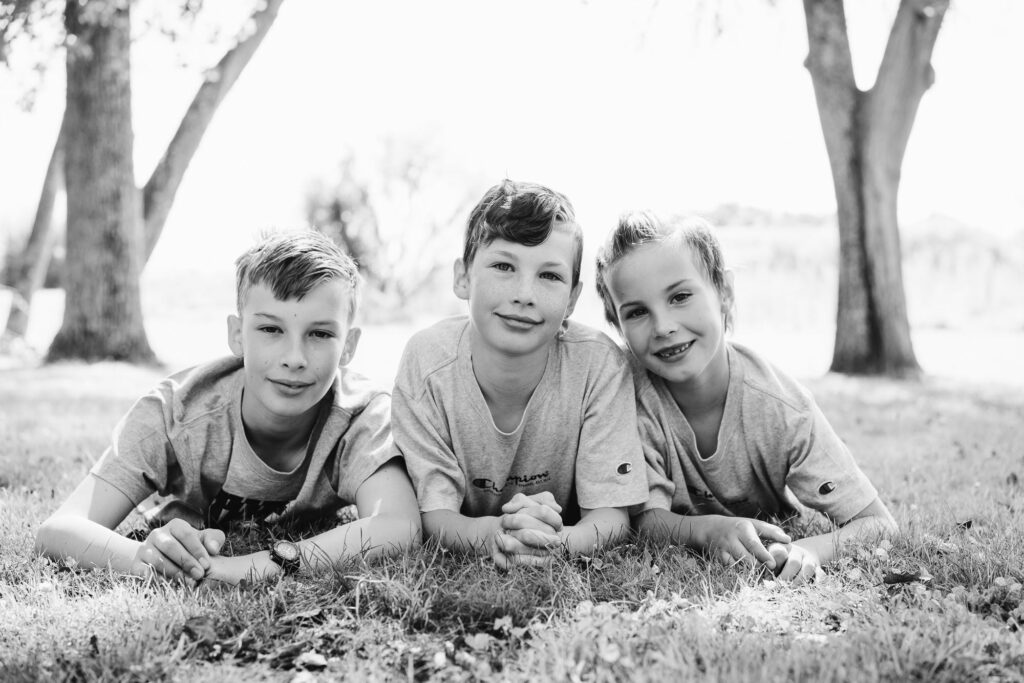
Why 100 days is genuinely a good age for a portrait
This is the part we can speak to with some authority, because it is a photographic question rather than a cultural one.
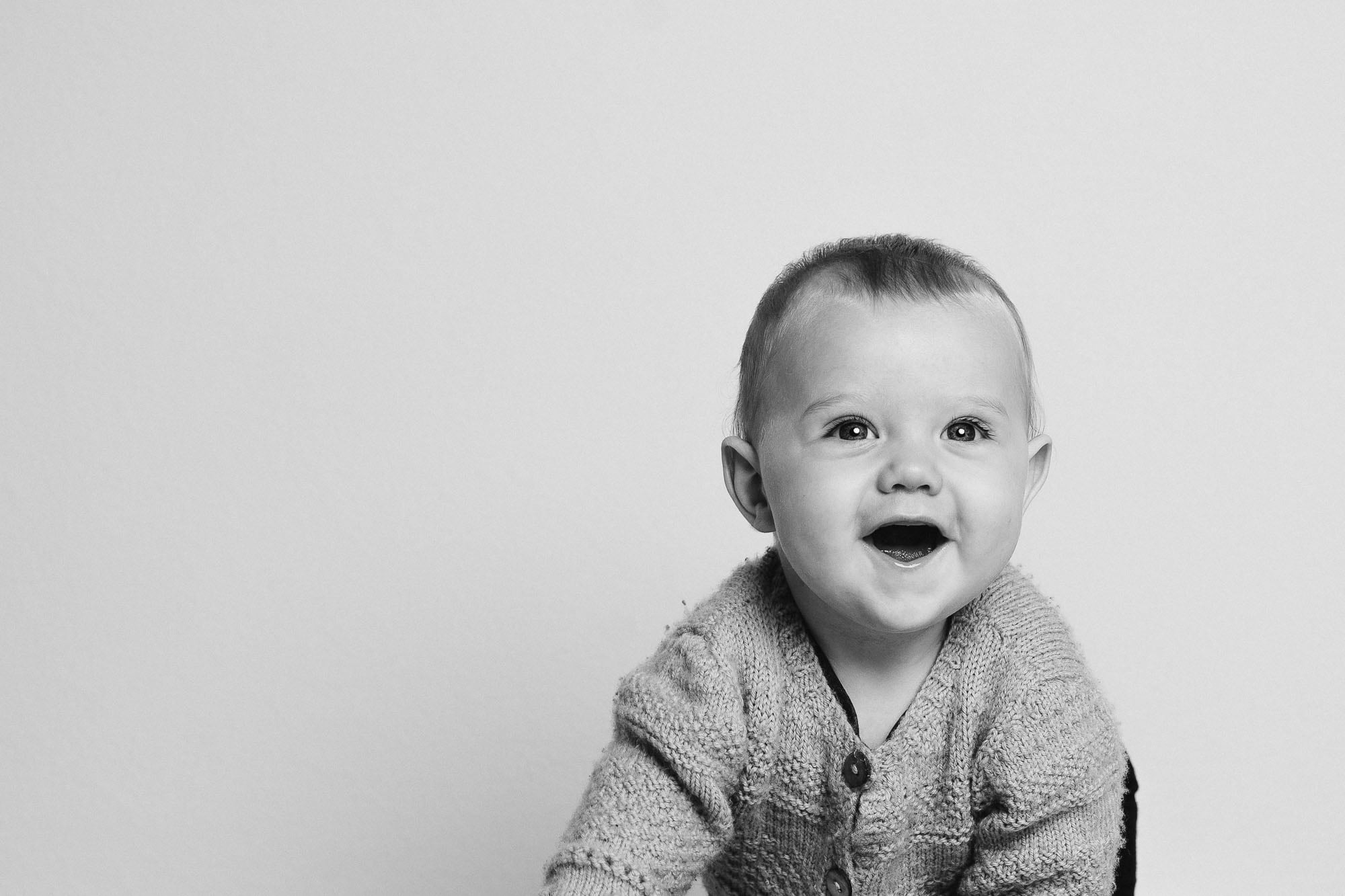
Around three and a half months, three things arrive at once. The baby holds their head steady and upright without support. Placed on their front, they push up on their forearms and look ahead. And they smile deliberately at a face they recognise, rather than in their sleep.
That combination does not exist before it. A newborn cannot hold their head, so every photograph is supported or asleep. A six-month-old is sitting and reaching and much harder to hold still. At a hundred days the baby is alert, social, easy to settle, and will hold a gaze at the camera for several seconds at a time — which is all a portrait needs.
It is also an easy session to run. Feeds are established, and parents are past the worst of the exhaustion.
What we photograph on the day
Four things, in roughly this order.
The baby alone. Head up, eyes open, on a plain surface. Both on the front pushing up and on the back looking straight up. This is the frame families print largest.
The baby with each parent. Separately, not just together. Mothers almost never end up in photographs with their own baby, and this is the session to fix that.
The gifts, worn. If there is a longevity lock, a jade pendant, a bracelet or an outfit sent from family overseas, we photograph it on the baby rather than laid out on a table. The object matters because of who gave it. A still-life of jewellery is not that; a picture of a baby wearing their grandmother’s gift is.
Everybody. One frame with every person in the room. This is the photograph that gets asked for years later, and it is the one most likely to be forgotten on the day because it takes organising.
Red, and when to use it
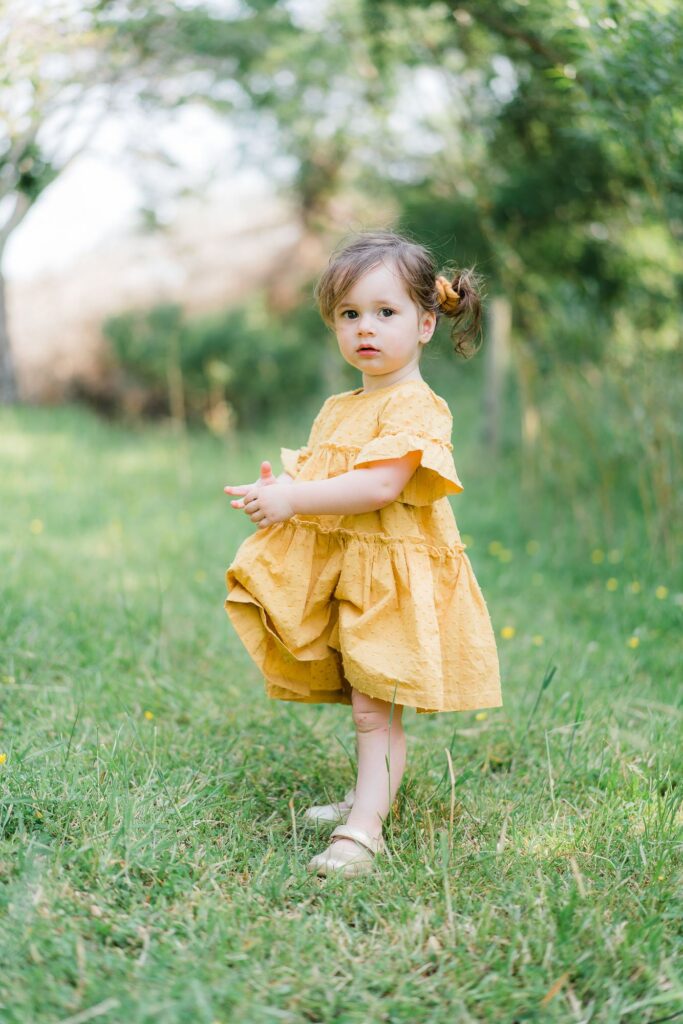
Red is the colour of the occasion and families often want it in the pictures. It works, with one caution: red reflects onto skin. A baby in a saturated red outfit against a red backdrop picks up a warm cast across the face that has to be corrected, and correcting it dulls the red.
What works better is red as the accent and not the field. A red outfit against cream or oatmeal. Or a soft neutral outfit with a red detail — a tie on a hat, a blanket edge, an embroidered panel. Traditional dress with gold embroidery photographs beautifully in plain light, and the gold does the work that a full red backdrop is trying to do.
Bring both. Bring the traditional outfit and one plain one, and we will shoot both sets. Families almost always end up hanging the plain one and gifting the traditional one, and both should exist.
The Sydney reality: grandparents on a plane
Here is the thing that shapes these bookings more than any tradition does.
For a lot of Chinese families in Sydney, the grandparents are not in Sydney. They are in Shanghai, Guangzhou, Beijing or Harbin, and they come for a visit built around exactly this period — helping with a newborn, staying for a few weeks or a few months, and flying home again.
That means the hundred-day photograph is frequently the only time in the child’s first year that all three generations are physically in the same country. It is not a nice extra. It is the reason to book.
Which leads to some practical advice we give every family:
- Book around the flights, not around the date. If the grandparents leave on day 96, photograph on day 90. The day is a marker, not a legal deadline, and no one will mind.
- Tell us who is coming and from where. If someone has been on a plane for eleven hours, we start later in the day.
- Plan the language in the room. Lin speaks Mandarin, and it changes a session completely when a grandmother can ask a question directly instead of through her daughter.
- Order prints before they fly home. This is the one families regret. A framed print goes in a suitcase; a download link sits unopened on a phone in another country. We will talk you through sizes that travel.
What it costs, and how to compare
A hundred-day session is, in market terms, a baby milestone session. Sydney studios generally charge $250 to $700 for a session at this age, with the photographs either included or bought afterwards. Adding a multi-generation family group usually adds time and sometimes cost — ask, because five extra people in the studio is a different job from photographing one baby.
The comparison that actually matters is the same one we would give anyone: what is the total, including whatever you will want on the wall. We wrote that out in full for newborn photography prices in Sydney, and it applies here without much change.
A morning, step by step
Families often ask what the day will actually be like, especially when grandparents are coming along. Here is a realistic outline for a hundred-day session in a studio.
- Arrival and settling. People take their shoes off, find somewhere to sit, and the baby looks around. We keep the first ten minutes unhurried because a baby who has had time to look at the room is a calmer subject.
- The baby alone. Usually first, while the baby is freshest. We watch for the moment the head is steady and the eyes are bright.
- Parents, one at a time and then together. Short sets, so the baby does not tire.
- A feed and a break. This is not lost time. A fed baby is a happy baby, and it gives adults a chance to rearrange themselves.
- The gifts and the traditional outfit. After the break, once the baby is calm again.
- Grandparents with the baby. Each grandparent separately, then the generations together.
- The big group. Last, because everyone is relaxed and the baby is still content.
If the baby tires early, we reorder rather than push on. The group frame, which matters most to many families, is easy to move to the front.
Preparing the grandparents
A first-time grandparent in front of a camera is often more nervous than the baby. A little preparation changes the whole room.
- Explain the plan the day before. Tell them roughly how long it will take and that the baby sets the pace.
- Ask them to bring the gift they want photographed. A lock, a bracelet, an outfit sent from home. We would rather see the real object than a replacement.
- Suggest comfortable clothing. Jet lag and a stiff outfit are a poor mix. Plain, soft colours are easy to photograph.
- Let them hold the baby. The pictures that matter are often the ones where a grandmother is looking down at the child, not at us.
- Tell them it is fine to speak. We want the baby to hear familiar voices, and a quiet song from a grandmother sometimes does more than any prop.
If an older relative has trouble standing for long, tell us. We can build the whole session around chairs.
What to do when the hundredth day lands somewhere inconvenient
Dates rarely line up. Here are the common clashes and what we suggest.
The day falls on a weekday and everyone works
Pick the nearest weekend. Families mark the day itself with a dinner, and the photograph session can come either side of it.
The baby is unwell on the booked morning
Move it. A baby with a cold is miserable, and the pictures will show it. A few days either way makes no difference to the meaning.
The grandparents are arriving after the day
Book around the visit and tell the elders. In many families the date is a guide, and everyone would rather the whole family were in the room.
The family is split across households
If some relatives live in another suburb, ask whether a short meet-up works the same morning. A single session with everyone present is worth more than two sessions with half the people.
Before the session
- Confirm how your family counts the hundred days, and tell us the date you are working to.
- Ask each grandparent which gift they would like photographed.
- Choose one traditional outfit and one plain one, and check both still fit.
- Ask the baby’s grandparents for their flight dates and note them on the booking.
- Plan the feed so it falls roughly an hour before the session starts.
- Bring a favourite soft toy or muslin that the baby already knows.
- Decide who will help the baby settle if a parent is being photographed.
If your family keeps a red egg tradition or a particular dish at the meal, mention it when you book. It is not something we will assume, and it is the kind of detail that makes a photograph feel like it belongs to your family and not to a template.
Common questions
Do we count 100 days from the birth date?
Families count it differently. Some count the birth day as day one, which puts the hundredth day at 99 days after birth. Some count differently again, and in some families the celebration is held on a date chosen by the elders for other reasons. Ask your parents what they are counting, then tell us the date. We work to your family’s number.
Is this the same as the full moon celebration?
No, and families sometimes do both. The full moon is at one month and is a different occasion with different customs attached to it — we cover it separately in our guide to full moon baby photography. Many families we photograph do one or the other rather than both, usually depending on when relatives can travel.
Our family is not Chinese but we like the idea. Can we book it?
Of course. Three and a half months is a genuinely good age to photograph a baby regardless of what you call the session, and plenty of families book it simply because it sits neatly between the newborn stage and sitting up. It slots straight into a first-year plan without displacing anything.
Should the baby wear the longevity lock during the shoot?
If your family is comfortable with it, yes, for part of the session. Some families prefer it is not worn until the day itself, and others keep it put away entirely for a child this small. Either is fine — tell us, and we will photograph it on a parent’s hand or beside the baby instead.
Can we include a photo with grandparents who could not travel?
Not in the same frame, and we will not composite one — it never looks right and families do not like it once they see it. What we do instead is make a strong single portrait of the baby, printed properly, framed and posted. That is a better object to arrive in Guangzhou than a manipulated group photo.
Book it around the people, not the date
A hundred days is a day worth marking, and the photographs happen to be good because the baby is at an easy, alert, cheerful age. But the reason we push families to book it is the room, not the baby. Grandparents come once, stay for a season, and go home, and a portrait with all three generations in it is the thing nobody can make later.
Tell us the hundredth day and tell us the flight dates, and we will find a morning that works around both. Email info@tzportraits.com — in English or Chinese, whichever is easier. We are in Epping, which is a short drive from Eastwood, Ryde, Chatswood and the Hills.
Portraits in and around Epping
Our studio is in Epping, and we photograph across Sydney.