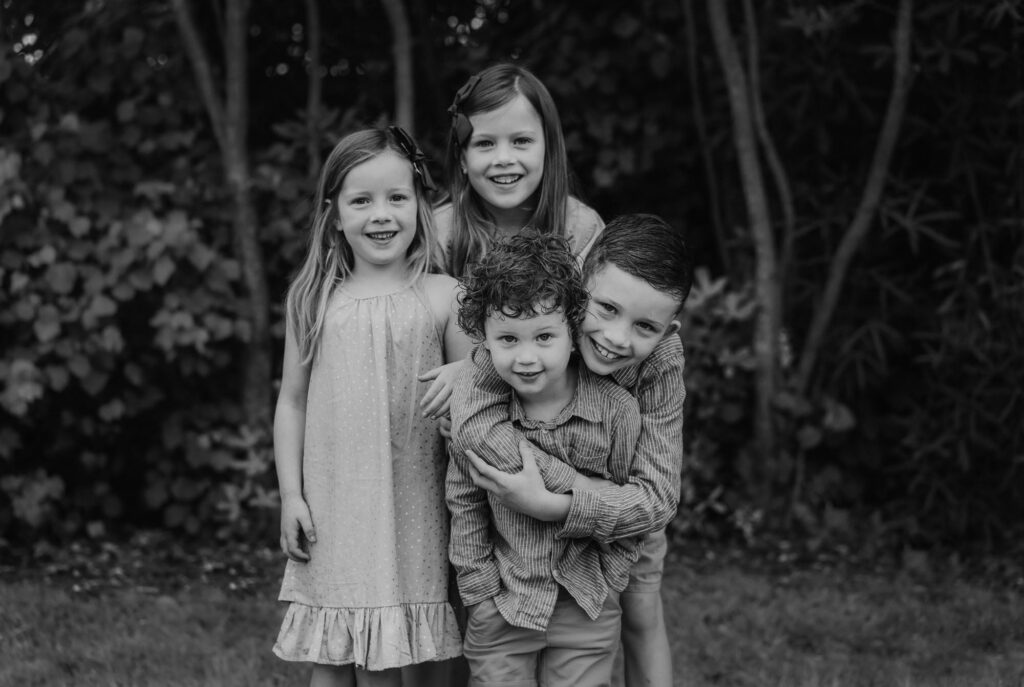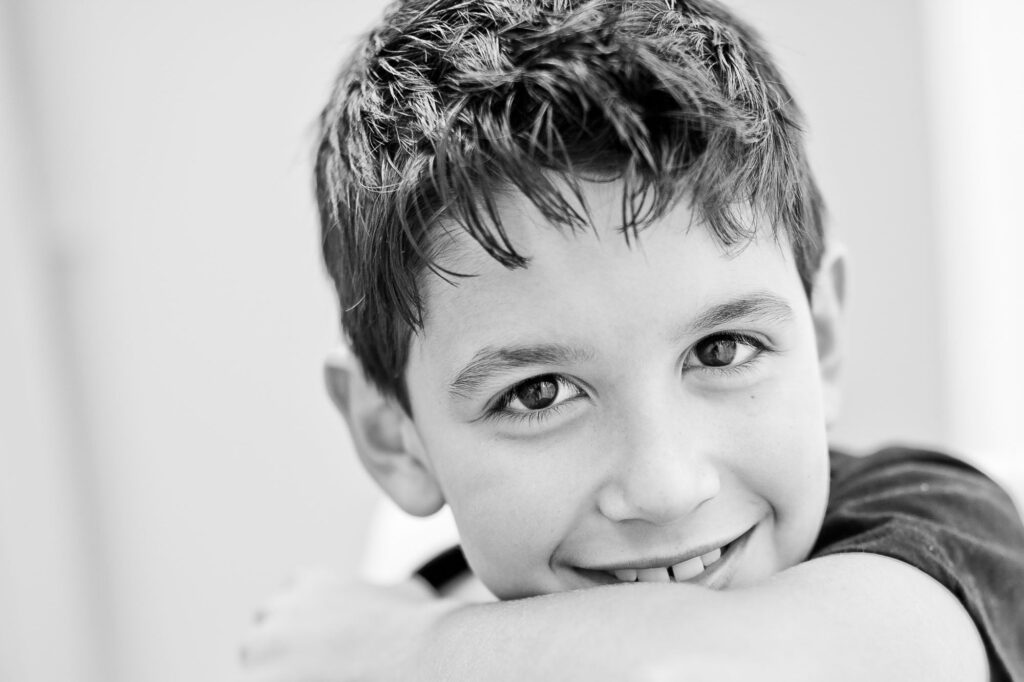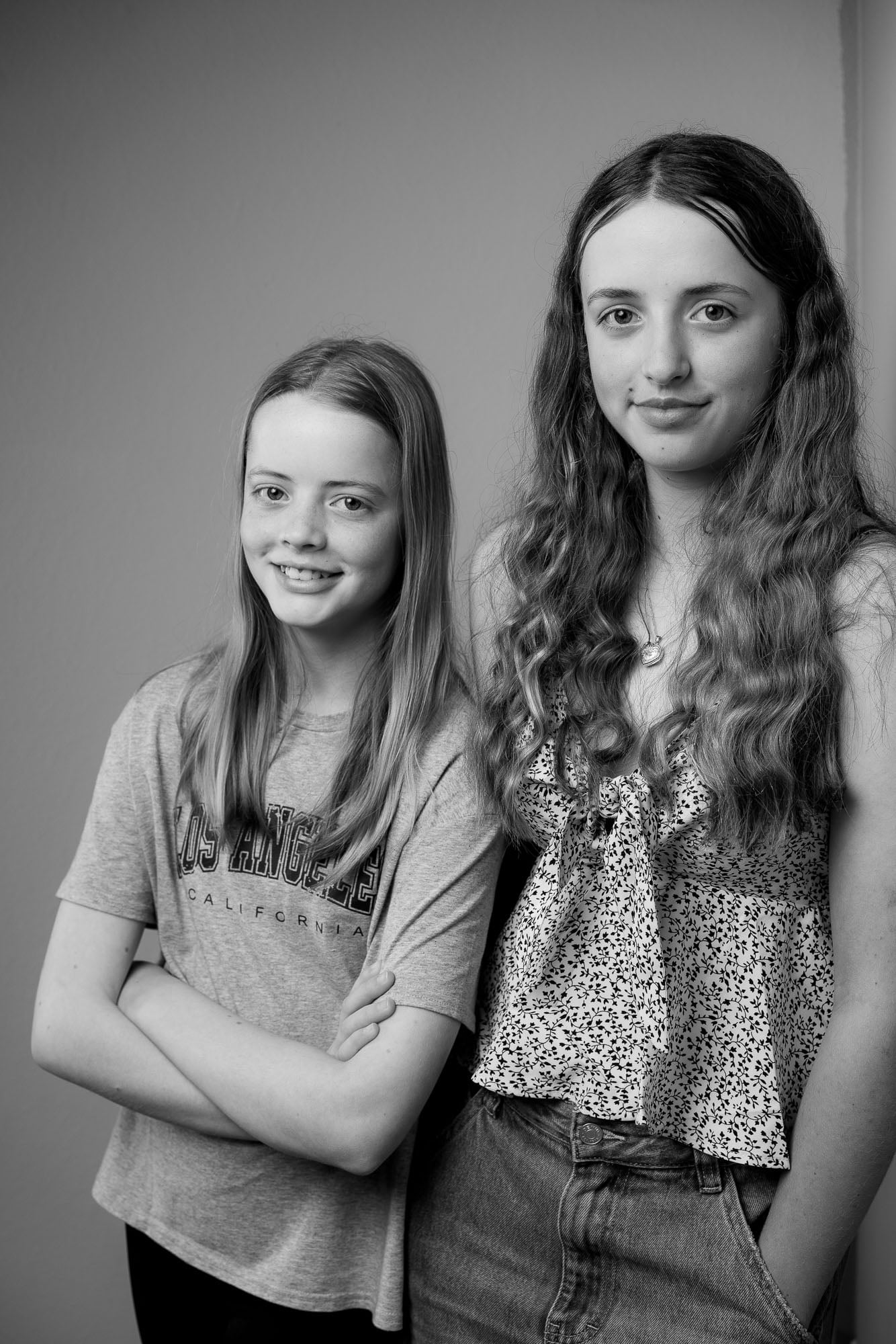
Short answer: Hornsby sits on the edge of real bushland, and that is what makes family portraits up here look different from park photographs. Sandstone, deep gullies and old scribbly gums give you texture and depth no oval can. Our Epping studio is roughly twenty minutes down the line if you would rather be indoors.
There is a point on the drive north where the suburbs stop pretending. The blocks get steeper, the road starts to bend, and suddenly you are in bush that has been there a very long time. That is the country we are talking about — Hornsby, Mount Colah, Berowra, Galston, Arcadia, and the valleys in between.
It is the best portrait terrain in northern Sydney and the most demanding. Both, for the same reasons.
Ridge or gully? It is the only decision that matters
Bushland photography up here comes down to where you stand relative to the land, and the two options produce entirely different pictures.
On a ridge, you get openness. Light from a wide sky, distance behind you, the tops of trees falling away. Portraits made here feel airy and the family sits inside a big view. It is also where the wind is, and where a summer afternoon gets uncomfortable fast.
In a gully, you get enclosure. Light drops in from directly above through a gap in the canopy, the background goes dark, and faces separate from everything behind them. These are the photographs that look like nowhere else in Sydney. The costs are real though: it is cooler, the tracks are steeper, and the usable light window is shorter because the sun has to be high enough to reach the floor.
We ask families to pick a feeling, not a place. Open and bright, or deep and quiet. The location follows from that. If you would rather see specific places first, the spots we actually use across northern Sydney lists them.
Sandstone is the reason these photographs look expensive
Hawkesbury sandstone is everywhere up here — ledges, overhangs, weathered blocks the size of a car. It matters for portraits in a way that grass does not.
It has colour in it, warm ochres and greys, which sits well against skin. It has texture that holds detail in a large print, so a metre-wide piece has something to look at up close. And it bounces light, which means a rock face beside a family often works as a reflector we did not have to carry.
The practical use is simple: sandstone is where we put people when the light would otherwise be flat. A family sitting on a warm ledge in the late afternoon is lit from two directions and nobody has to squint.
Bushland is not a park. Come prepared
This is the part most photographers leave off a location page, and it is the part that decides whether the session is enjoyable.
- Ticks are real in northern Sydney bushland, particularly in the warmer months. Closed shoes, and check everybody afterwards, children included. It is not a reason to avoid the bush — it is a reason to do the check.
- Snakes are around in summer. We stay on tracks and open ground, do not go poking around log piles, and in practice we have never had an issue.
- Shoes over sandals. Sandstone is slippery when damp and the steps are uneven.
- Phone reception drops out in the gullies. Agree a meeting point before you separate cars.
- Carry water. More than you think, especially walking back up.
None of this applies if we shoot at the studio, which is a legitimate reason to choose the studio.
The seasons up here run differently
| Season | What the bush is doing | Our view |
|---|---|---|
| March–May | Cooler, low sun, still dry underfoot | The best of the year. Book early. |
| June–August | Crisp, low light, bare gullies, few people | Underrated. Bring a jumper for between frames. |
| September–November | Warm, growth everywhere, ticks active | Good, with the practical list above taken seriously. |
| December–February | Hot, harsh, humid, fire risk on bad days | Early morning only, or the studio. |
Bushland also punishes the wrong wardrobe harder than a park does, so read the clothing guide before you plan outfits.
Fire danger is the one that overrides everything. On a declared bad day we will not take a family into bushland, and we will move the session without argument. That is not caution for its own sake — access roads up that way can close quickly.
Teenagers, which is who this actually suits
Here is an unpopular opinion: bushland sessions are wasted on toddlers and brilliant with teenagers.
A two-year-old does not care where they are and will be hot, itchy and over it inside twenty minutes. A fifteen-year-old who has spent the last three years refusing to be photographed will often relax completely on a rock ledge in a gully, because it does not feel like a photo shoot. There is something to climb on, nobody is watching, and the whole thing is closer to a walk than a session.
If you have older children and a family portrait has become a fight, this is the version we would suggest trying. For younger families, the studio comparison is worth reading first.

Galston, Arcadia and the acreage side
West of Hornsby the land opens out — larger properties, paddocks, long driveways, the winding descent through Galston Gorge. It is a different look again, closer to country than to bush.
If you live on acreage out there, the strongest photograph is almost always taken at home rather than anywhere we would drive you to. We have made family portraits on people’s own back paddocks that no public location could match, for the plain reason that the place means something to the family in it. Send us a few phone photos of your land in the late afternoon and we will tell you what we would do with it.
Twenty minutes to the studio
The Epping studio is a straightforward run down from Hornsby — around twenty minutes in ordinary conditions, and the train line goes door to door if you would rather not drive.
We would steer you indoors for anything newborn, for grandparents who cannot manage uneven ground, and for any portrait with a fixed deadline that cannot survive a weather change. Everything else, the bush is right there.
What does a bushland session look like from start to finish?
Take a family from Berowra with two children, ten and fourteen, booked for a late-autumn afternoon. This is how a session like that tends to unfold.
We meet at the car about forty minutes before the light we want. The first ten minutes are not photography at all. We walk the short track together, point out the uneven steps, and let the children get the fidgeting out. A teenager who arrives scowling often stops scowling once there is a rock to climb. We carry the equipment, and you carry nothing but water.
We start at the spot with the most forgiving light, usually a sandstone ledge where the sun reaches sideways rather than down. Family frames first, while everyone is clean and cheerful. Then we loosen up: the children walking ahead, a parent and child sitting on the ledge, the two siblings paired up for a few frames. By about the halfway point the light has dropped into the gully and we move down to the cooler, darker spot for the quieter pictures.
The last stretch is the walk back. Often it gives the best natural photographs of the afternoon, because everyone is tired, talking, and no longer thinking about posing. We keep the camera up the whole way. We would rather make a picture you did not plan than miss one you did.
What if the weather turns?
Bushland sessions depend on the sky more than studio sessions do, so it is worth knowing in advance what each kind of day means. These are our practical suggestions, and we will talk any of them through with you before the day.
| Conditions | What we would suggest |
|---|---|
| Overcast and dry | Go ahead. Soft, even light is kind to faces, and gullies look rich under cloud. |
| Light drizzle | Talk to us. A short, covered session can work, but wet sandstone is slippery and children get cold fast. |
| Heavy rain or wind | Move the date, or switch to the Epping studio if the date matters more than the location. |
| Very hot afternoon | Move earlier in the day or choose the studio. |
| Fire danger | We do not go into bushland. We reschedule. |
A forecast three days out is a fair guide, not a promise. We usually make the call the day before, and if you are anxious, message us. A decision made calmly at 5pm on a Thursday is better than an argument in a car park on Saturday.
If the family is divided about bush versus indoors, our comparison of studio and outdoor family photos sets out what each does best.
How do we dress for a session in the bush?
The ground and the temperature should decide the outfits more than the photograph does. Sandstone steps, leaf litter and a gully that stays cool all afternoon punish thin fabrics and heels. Think layers you can remove: a plain knit that can come off when the sun hits, then go back on in the shade. Sturdy shoes are not optional, and in our experience neutral boots or clean trainers photograph fine, especially from a distance. Our what to wear for family photos guide covers colours that sit well against rock and eucalypt.
- Closed shoes with grip for everyone, including the youngest.
- A spare layer each, in case the gully is cooler than the car park.
- Water bottles, with extra for the walk back up.
- Insect repellent on, then a tick check on everyone afterwards.
- A meeting point agreed, since phone reception can drop in the valley.
- Hats and sunscreen if the session is on a ridge.
- A small towel in the car for muddy feet.
One more detail from the Hornsby side specifically: the tracks tend to end in a lookout or a ledge rather than a loop, so the walk back is the same path you came down. Save your family’s energy for it. A child who has been promised an ice cream at the top of the hill will happily climb it.
Common questions
Which is better for photos, Berowra or Ku-ring-gai Chase?
They give you different things. The Ku-ring-gai side has the big open outlooks and the water views; the Berowra valley side has the deeper, quieter gully country. If you want the family inside a landscape, go for the views. If you want the family to be the only thing in the frame, go into the gullies.
Do you need a permit for national park locations?
Commercial photography in national parks can require a permit, and separate rules apply on council reserves. We sort that before the day. It is also why we return to locations we already know — the access, the parking and the paperwork are already settled and the session can be about your family instead.
How far will we have to walk?
We keep it short by design, usually a few minutes from the car, because a long walk in good clothes with small children ruins the mood before we start. If someone in the family has limited mobility, tell us at booking and we will choose a spot with a short, flat approach. There are more of those than people assume.
Is it too dark under the trees for good photos?
Not for a photographer working properly, no. Gullies are darker than a park, and that is largely the point — the background goes down and the faces stay up. We time the session for when light reaches the floor, and bring what we need if it does not. Darkness is a look, not an obstacle.
Can we combine a bushland session with photos at home?
Often yes, particularly on the Galston and Arcadia side where home is already surrounded by the landscape. It is a longer session and it needs planning around one light window rather than two, but the result covers both the formal portrait and the pictures of your family where they actually live.
If you live up the top of the line
The thing worth knowing is that you already have the best location, and you drive past it every day. Bushland twenty minutes from a studio is not a compromise for people who could not get to the harbour. It is the reason families come up here to be photographed.
Tell us your suburb, the ages of your children and whether you are picturing ridge or gully, at info@tzportraits.com. If the answer is that you would rather be warm, indoors and certain of the weather, say that instead — the studio is twenty minutes away and it never rains in it.
Portraits in and around Epping
Our studio is in Epping, and we photograph across Sydney.