Short answer: Photograph the mother alone first, then bring in the partner, then the older children last. Children hold about fifteen good minutes, so spend them at the end when everything else is done. Keep the group small — partner and siblings only, with grandparents saved for a separate family session.
The order is the whole trick. Get the order wrong and a session that should have been easy turns into forty minutes of negotiating with a four-year-old while the woman the pictures are about stands there getting tired.
Solo frames first, always
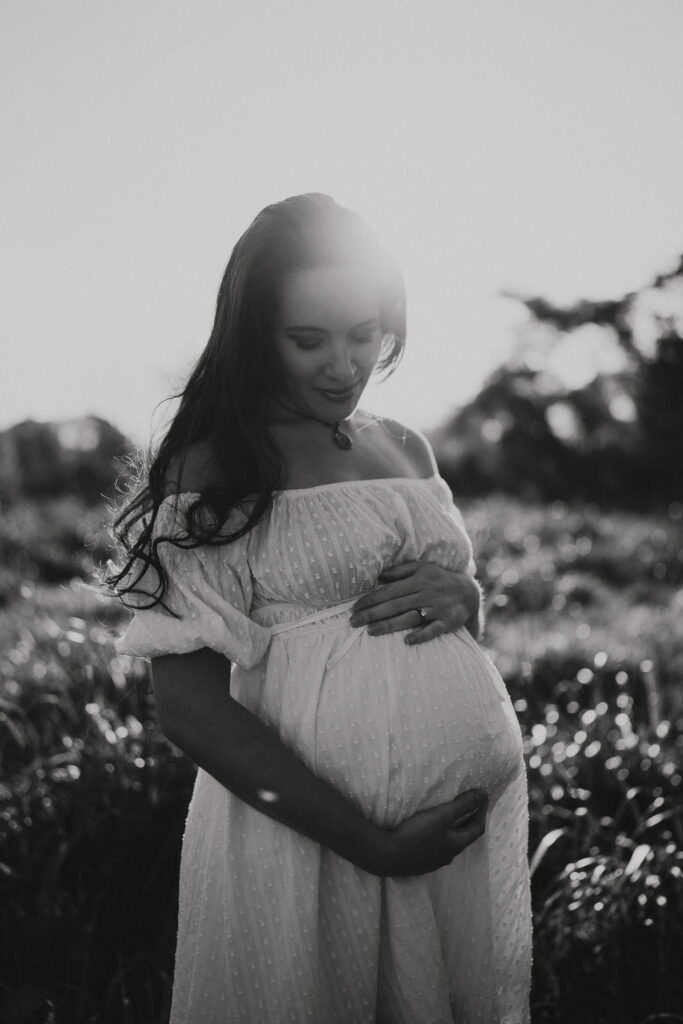
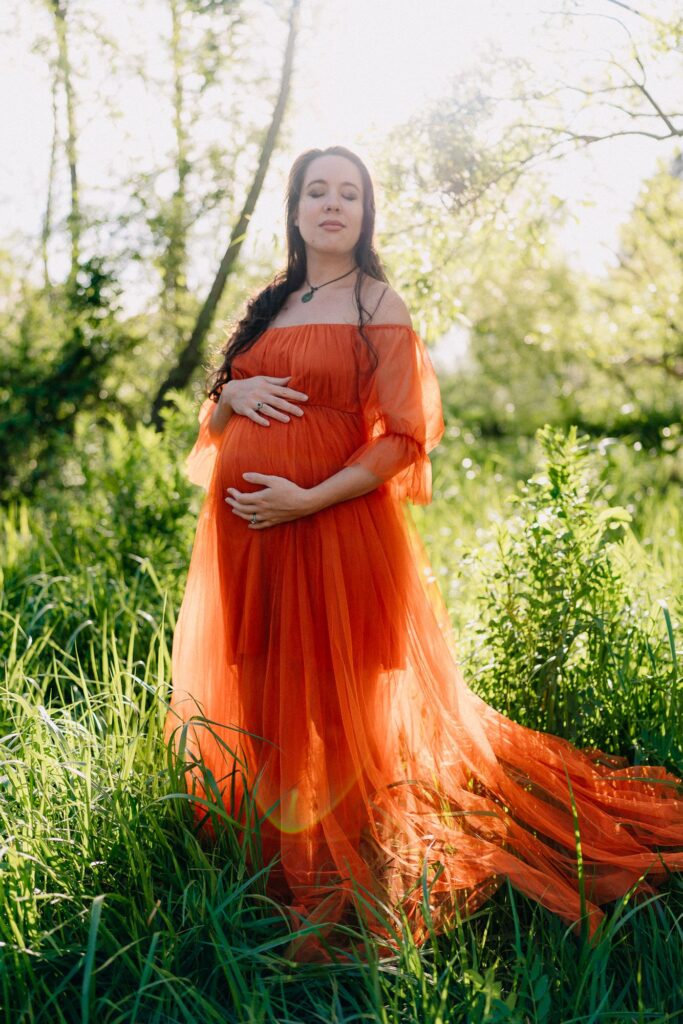
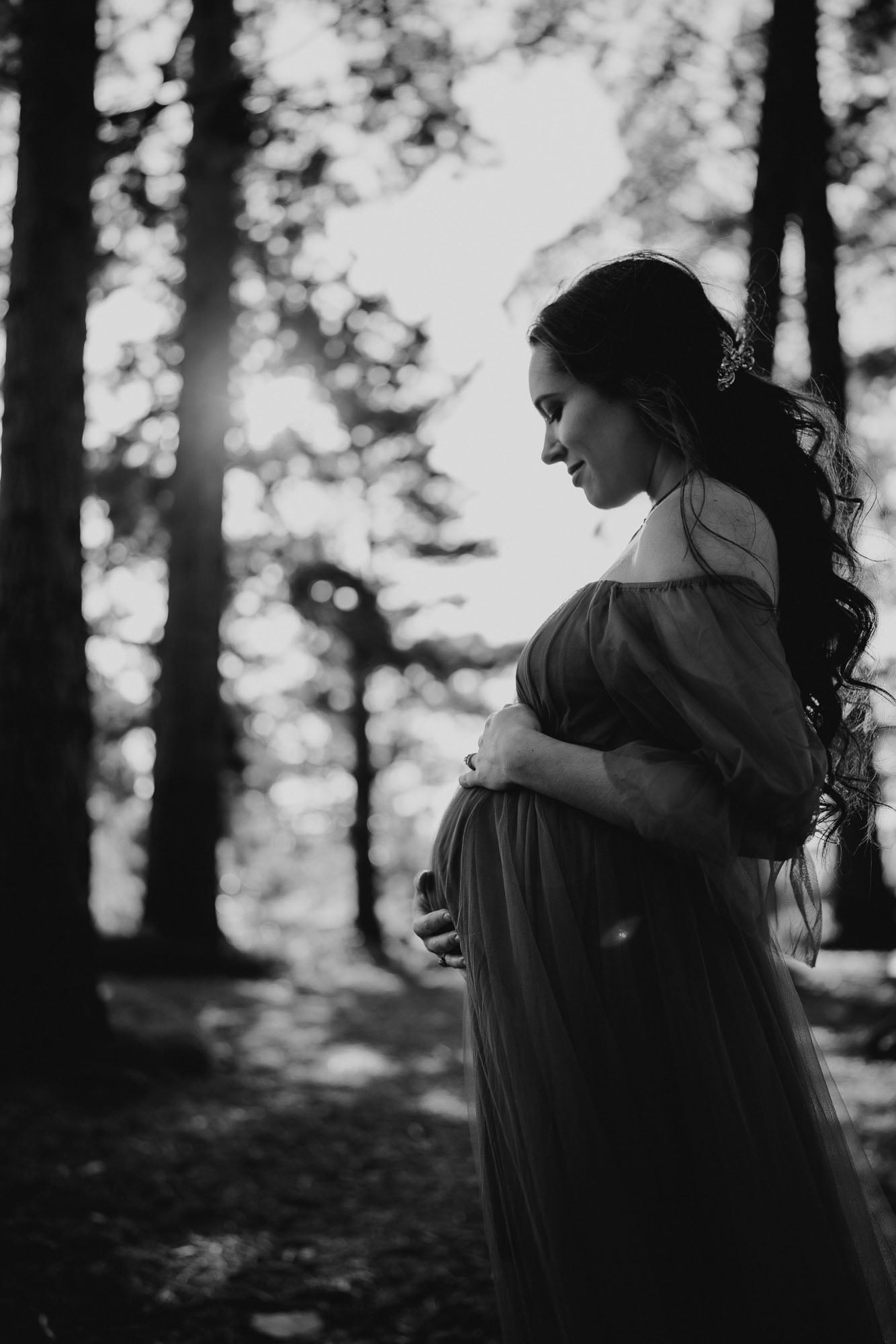
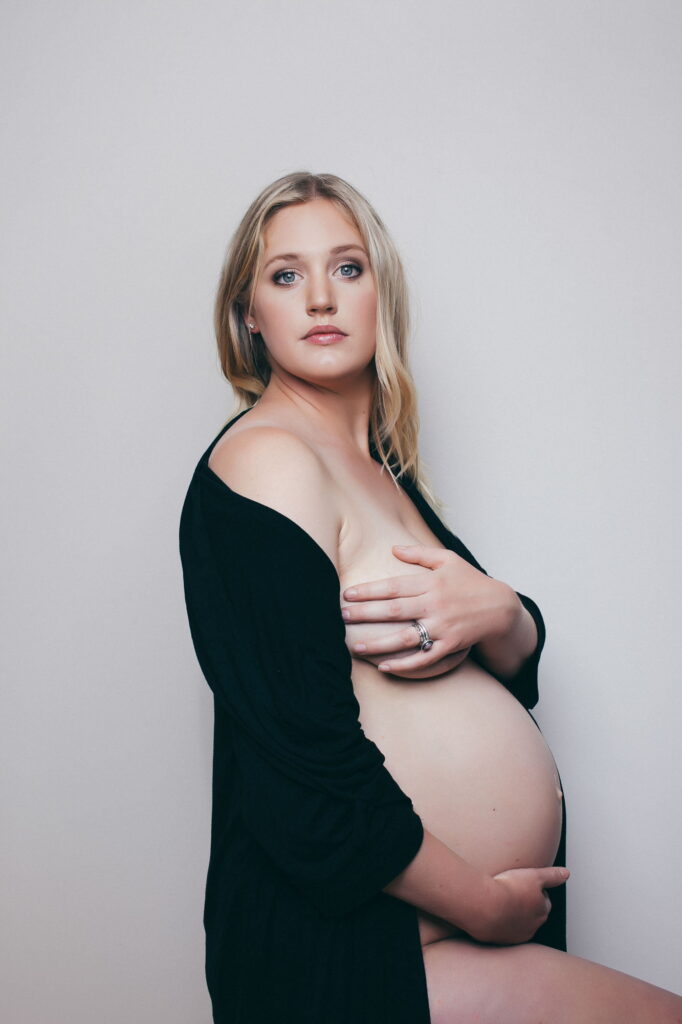
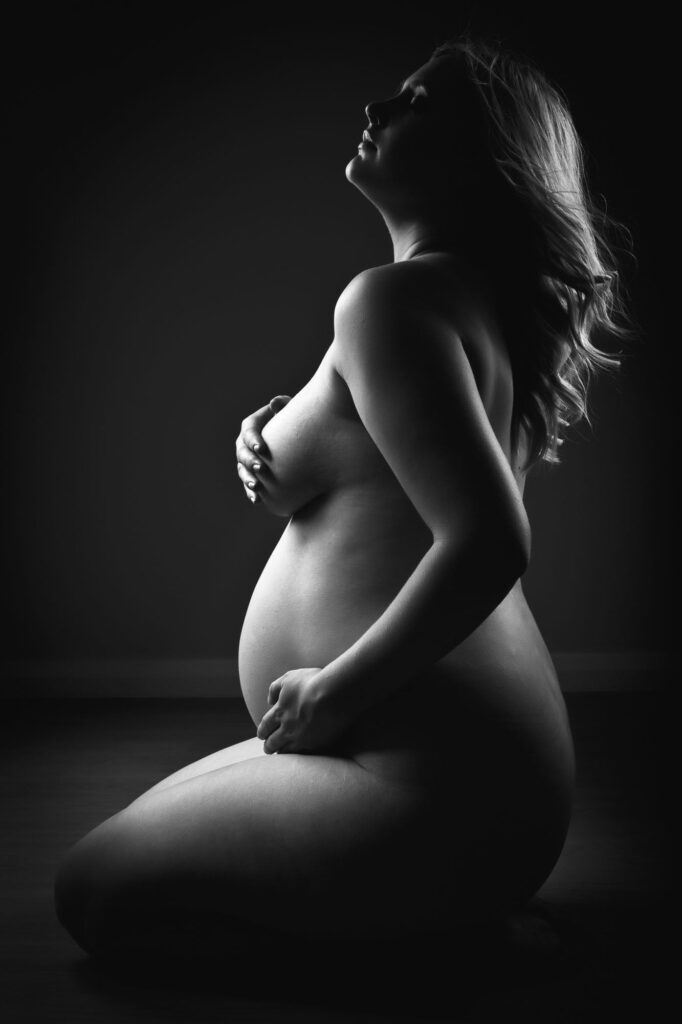
The photographs you will still care about in ten years are almost certainly the ones of you on your own with the bump. They are also the hardest to get, because they need you relaxed and they need the light set precisely.
So they go first, while you have energy and while nobody else is in the room asking when it will be finished. If your partner is coming, he waits outside or sits out of the way with a phone. If children are coming, they are not in the building yet, which is why we suggest someone else drops them off partway through.
It feels counterintuitive to pay for a session and spend the first half of it alone. Do it anyway.
Bringing in your partner
Men are, on the whole, worse at this than children. Children are uninhibited. Partners arrive stiff, convinced they are bad at photographs, and their instinct is to stand beside you like a passport photo.
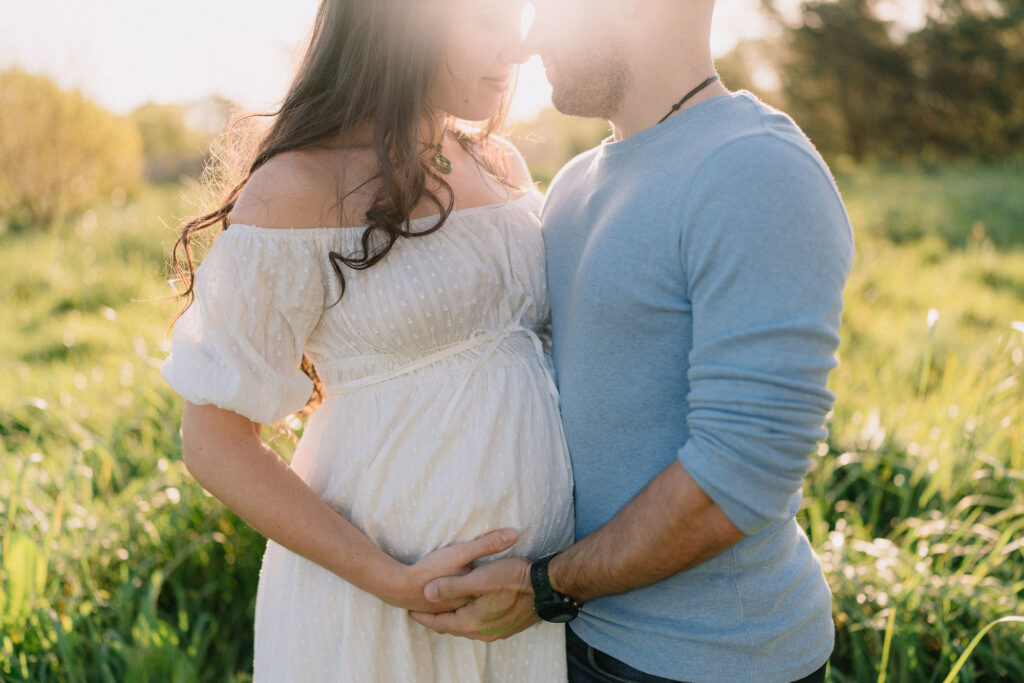
The fix is to give him a job instead of a pose. Hands on the bump from behind. Chin resting on the top of her head. Take one step in and whisper something she will laugh at. Every one of those is a physical instruction with a clear endpoint, and it produces a picture where he is doing something rather than being photographed.
The frames that work best are usually the quietest: the two of you in profile, foreheads touching, his hands under the bump with hers. Nobody looking at the camera at all.
Older children, and the fifteen-minute rule
A three-year-old has roughly fifteen genuinely good minutes in a studio. A seven-year-old maybe twenty-five. After that you are spending the session managing behaviour, and it shows in the faces.
So they come in last, they get their frames quickly, and then they are done and out. We shoot the picture you care most about within the first four minutes of them arriving, before the novelty wears off — usually a child with hands or an ear on the bump, or being lifted and held next to it.
The instruction we give children is never “smile”. It is something to do. Tell the baby a secret. Can you hear anything in there? Kiss the bump and then run back to Dad. That produces a real expression; “cheese” produces a grimace, which is a whole argument we make in getting kids to actually smile.
If the child is under two, bring another adult. Not to help pose — to carry them out when they have had enough, so the session can carry on without a meltdown in the background.
Who to leave out
This is where we will be unpopular. Grandparents, siblings, best friends and the cousin who is visiting from Shanghai should not be at a maternity session.
Not because they do not matter — because a maternity session is a portrait of a woman and the people who live with the pregnancy day to day. Add six more people and the light has to open out, the setup has to widen, the bump stops being the subject, and you have paid for a group photograph you could have taken any weekend.
If extended family matter to you, and for a lot of families in Epping and Eastwood they matter enormously, book a proper three-generation session after the baby arrives, when there is actually a baby for everyone to gather around. It is a better photograph and a better occasion. Planning a three-generation session covers how that one is run.
What everyone should wear
The mother’s outfit is decided first and everyone else is fitted around it. Pick one colour family, then give each person a different value within it — a deep ink gown, a charcoal knit on your partner, a soft grey or oatmeal on the children.
No logos, no cartoon characters, no stripes on a small child standing next to a gown. Long sleeves photograph better than bare arms on children, who otherwise become four bright limbs pulling the eye around the frame. Full detail on the mother’s side of this is in what to wear for maternity photos.
The thing to say to your children beforehand
Tell them the night before, not in the car. Tell them where you are going, that there will be big lights, that a man and a lady will take pictures, and that they will get to touch the bump and say hello to the baby.
Do not promise them it will be quick and do not threaten them about behaving. Both put them on edge before they walk in. A child who arrives curious is easy. A child who arrives braced is a long twenty minutes for everyone.
What does a maternity session with a partner and two children look like on a Saturday morning?
Take a family from Carlingford: mum at about 34 weeks, dad, a five-year-old who is excited, and a two-year-old who is not yet sure about anything. Here is how we would run their 10am slot, and why each step sits where it does.
9:50. Mum arrives with dad and the five-year-old. The two-year-old comes with a grandparent who has agreed to wait in the car or at a nearby cafe for the first half. Nobody is rushed in. Mum has a glass of water and sits for a minute while we talk through the outfits.
10:00 to 10:30. Mum alone. The light is set and she can take her time. Dad sits out of the way and is told, kindly, that this part does not need him.
10:30 to 10:45. Dad joins. We give him the jobs described elsewhere, and keep this stretch short, because partners warm up slowly and then tire of it quickly.
10:45 to 11:00. The five-year-old, then the two-year-old if they have arrived and are willing. One frame each with the bump, then one together with both parents. We finish before anyone has used up their goodwill.
The point of showing the clock is that the children’s window is small and sits at the end. It also shows what we leave out: there is no long wait for anyone to be bored in, and no stretch where mum is standing with her feet aching while a toddler is coaxed out from under a chair.
What if mum is tired, uncomfortable or having a bad day?
Late pregnancy is unpredictable. Backache, swollen feet and heartburn do not respect a booking. Some practical points, with the usual caveat that anything medical belongs with your doctor or midwife rather than us.
- Tell us at the start, not at the end. If sitting is easier than standing, or standing is easier than sitting, we plan the poses around it.
- Ask for breaks. Five minutes with a drink and a chair is not a delay. It is how the next frames look relaxed rather than endured.
- Wear what you can breathe in. A tight gown that looked fine in the shop can feel different at the end of a long pregnancy week. Bring a soft layer to put on between setups.
- Know the cut-off. If your doctor or midwife has advised you to limit activity, follow that over any booking. Rescheduling is an ordinary request.
If mum has had a rough week, the family photographs can still work well. A seated frame with the children leaning against her and dad behind needs very little from her body, and it often becomes the one everyone keeps.
How do I prepare the children, and what do I bring?
We cover the conversation the night before in the main article. This is about the bag and the handover, which is where small things go wrong.
- Name one adult as the child wrangler, and agree who takes over when the child has had enough.
- Feed the children before you leave the house, and bring a dry snack in case.
- Pack a spare top for each child and a wipe or two.
- Bring one comfort item per child, to be handed to us rather than carried into frames.
- Decide in advance whether a sibling is photographed alone with the bump, or only with a parent.
- Write the running order on your phone so the second adult can see it.
- Choose clothes that the child can sit, crawl and hug in without tugging.
- Tell us whether any child has a fear of lights, loud noises or strangers.
A final suggestion for the siblings. Give each older child a small question to ask the baby, such as what its name should be or what it wants to be when it grows up. Children who are given a job that is not “stand there” are the ones who lean in, listen, and stay in the frame long enough for us to get it.
The frame to ask for on the day is the oldest child with an ear against the bump and mum’s hand on their head. In a year, that is the one the baby will point to.
Common questions
What order should we actually shoot in?
Mother alone, then mother and partner, then the whole group, then each child with the bump one at a time, then the children released. The group shot sits in the middle rather than at the end deliberately — by the end the youngest has usually stopped cooperating, and the group frame is the one that needs everybody.
My partner really does not want to be in the photos.
Then he does not have to be. Plenty of sessions are solo, and a reluctant person in a frame is visible in every copy of it forever. What often works is offering him two frames only, hands on the bump, no face to camera. Most men say yes to that and half of them then stay for more.
Should the kids be in every setup?
No. Three or four frames with them is plenty, and it keeps the session about the pregnancy. Parents who put the children in everything end up with a family session that happens to have a bump in it.
Can we bring the dog?
Yes, if someone can take him out afterwards and he is comfortable on a hard floor under lights. Tell us when you book so we can plan the floor covering, and expect two or three frames rather than a whole set.
What if one child refuses completely on the day?
We let them refuse. Forcing a child into a frame produces a photograph you will not print. We shoot around them, and more often than not they change their mind once they have watched their sibling do it and nobody made a fuss.
Decide the guest list before you book
Write down who is coming, in the order they will be photographed, and who is taking the children out. That one piece of planning is the difference between an easy session and a chaotic one, and it takes three minutes at the kitchen table.
Send us that list with your booking — names, ages of the older children, and whether your partner is nervous — and we will build the running order around it before you arrive. info@tzportraits.com.
Maternity portraits, planned around you
Studio or outdoors, seated or standing, with partner and children if you like.