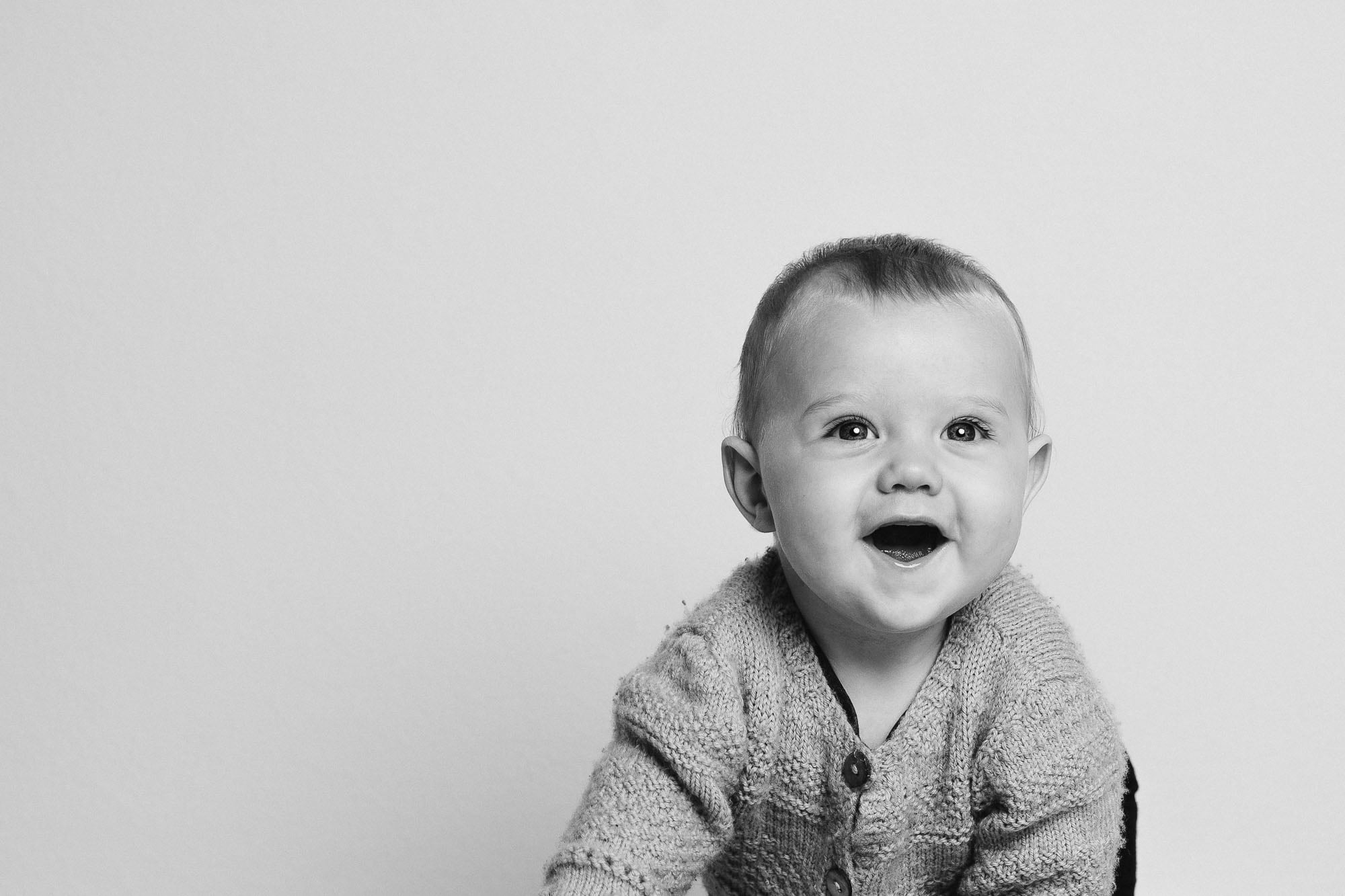
Short answer: A sitter session photographs a baby at the point they can sit unaided but cannot yet crawl away — usually six to eight months. It is a short studio shoot, 30 to 45 minutes, and the window it captures is a matter of weeks. Once a baby is mobile, this particular photograph is gone.
Of all the baby milestones people book, this is the one most parents have never heard of, and the one we get asked about last. Usually the message arrives when the baby is nine months old and already crawling. By then we are photographing something else entirely.
So here is the case for it, and the timing, which is the whole thing.
What a sitter session actually is
A baby propped upright on a plain surface, in good light, looking straight down the lens. No props to speak of. No posing in the newborn sense, because nobody is arranging anything — the baby is holding themselves up, and that is the picture.
We shoot them close. Head and shoulders, then the whole small round body sitting there. Hands usually go into the mouth. Feet come up. There is a lot of leaning forward to inspect the blanket. If a baby topples, they topple, and the frame just before the topple is frequently the best one of the session.
The character of these images is different from newborn work, which is soft, curled and asleep. A sitter is awake, alert, and looking at you. For a lot of families it is the first portrait where the child looks like the person they are about to become.
Why the window is weeks, not months
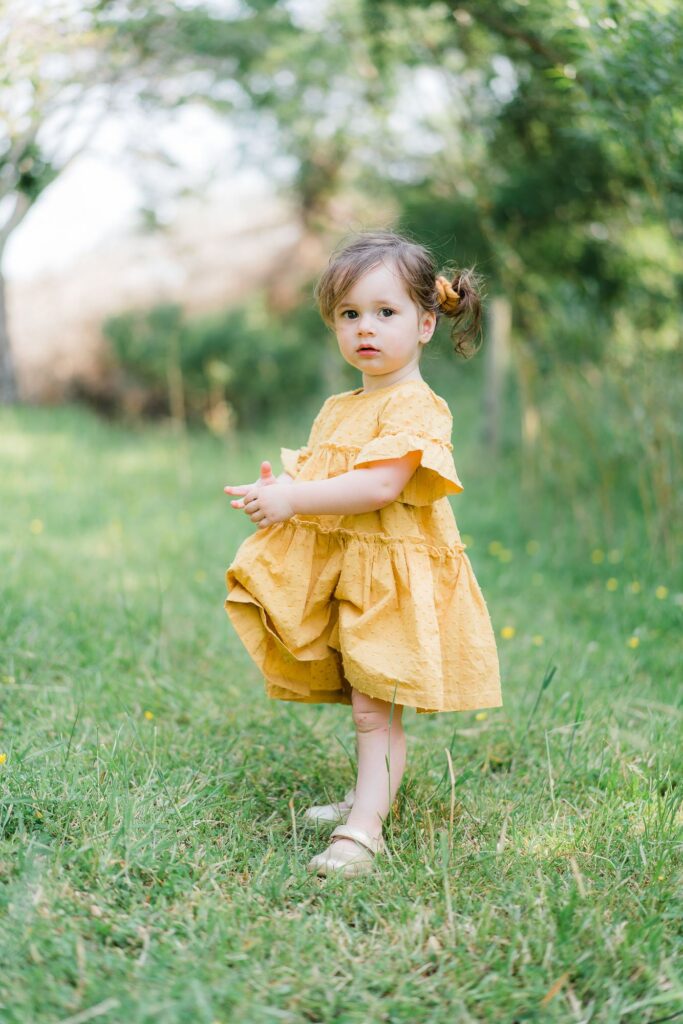
Babies sit independently somewhere around six to eight months. Some at five and a half, some at nine. Crawling — or the commando shuffle that comes before it — starts somewhere around seven to ten months.
The sitter session lives in the gap between those two, and for a lot of babies that gap is four to six weeks wide.
Before it, the baby still folds forward or needs a hand behind them, and what you get is a photograph of an adult’s arm. After it, the baby has somewhere to be. The second a child can move, they will not stay on a backdrop for twenty minutes, and the session becomes a chase. We can still make good photographs of a mobile eight-month-old, but they are action pictures, not this calm, upright, eye-contact portrait.
That is why we tell parents not to wait for a free weekend. You are not booking a month, you are booking a stage, and the stage does not wait for the calendar.
How to tell your baby is ready
Do not go by the number. Go by the floor. Sit your baby on carpet with nothing behind them and watch for thirty seconds. Ready looks like:
- They hold their own head and back upright without visible effort.
- They can wobble, correct themselves, and stay up.
- They can look sideways at a noise without falling over.
- They can sit for a minute or two without getting frustrated.
Not ready yet looks like sitting in a tripod — both hands planted forward on the floor as a brace. That baby is close, often a fortnight or so away, and we would rather you sent us a video and waited than came in early.
Past the window looks like a baby who sits fine but pitches forward onto their hands the moment something across the room looks interesting, then travels. Still worth photographing. Different session, different expectations, and we will tell you that up front.
Timing the day around the nap
Six to eight months is usually two naps, one mid-morning, one early afternoon. We book sitter sessions for about forty-five minutes after the morning nap ends, with a full feed in between.
A tired baby at this age cannot sit. That is not mood, it is physical. Core strength goes first, and a baby who was sitting beautifully at home collapses sideways in the studio and cannot understand why. If your baby wakes late or the morning goes badly, message us and move it. We would rather shift an hour than photograph a floppy, miserable child.
Keep the session short. Thirty to forty-five minutes is genuinely enough. Sitting is hard work at seven months, and after that they are done.
What to bring, and what to leave at home
A plain outfit — a knit romper, a simple singlet and nappy cover, or nothing but a nappy cover. At this age the folds in the arms and legs are the point of the photograph, and a long-sleeved patterned onesie hides all of it.
Bring a spare outfit, a feed, and one small familiar toy. Not the noisy one. Something they can hold and turn over, because a baby who is holding something sits better and for longer than a baby holding nothing.
Leave the giant flower headband and the personalised wooden name sign. They date the photograph to the year rather than to the child, and in ten years it is the name sign you notice first. We would rather the picture be of a baby.
| Session | Typical age | Length | What you get |
|---|---|---|---|
| Newborn | 5–14 days | About 3 hours | Curled, asleep, soft and quiet |
| Sitter | 6–8 months | 30–45 minutes | Upright, awake, direct eye contact |
| First birthday | 11–13 months | 45–90 minutes | Standing, personality, cake if you want it |
If you are weighing up which of these is worth doing and which you can skip, that is a real question with a real answer, and we go through it properly in our first-year baby photography plan.
What sitter sessions cost in Sydney
Because they are short, sitter sessions are usually the cheapest studio milestone. Across Sydney they tend to run $200 to $600 depending on whether the images are included or bought afterwards. Some studios only offer them as part of a first-year package booked at the newborn stage, which is worth knowing before you compare quotes — a session that looks free was paid for months ago.
Compare on the total, not the sitting fee. That is the same advice we give for newborn photography pricing in Sydney, and it applies just as hard here.
What does a sitter session look like from the minute you walk in?
Picture a Thursday at ten past ten. You arrive with a seven-month-old who woke at eight, napped from nine-fifteen and has just been fed in the car. The first five minutes are nothing. The baby is carried around the room, shown the lights, and given the small toy you brought. Nobody sits them down yet.
Then the first placement. We sit the baby on a low, soft surface, check they are steady, and you settle just outside the frame, close enough to catch them. One of us stands near the camera making the noises babies tend to find funny. The first few frames are for us, to check light and to see how this particular child sits: upright and solemn, or leaning forward like a keen student.
From there, the session is a series of short bursts. A burst is about two minutes of sitting, a reset, a drink or a cuddle, and another burst. The reset matters more than the sitting. A baby who is allowed to stop is a baby who is happy to start again.
Most families are surprised by how quiet it is. There is no routine of props and costume changes. It is a child, a light, and patient adults, and the result looks as unfussy as the process feels.
Which sitting problems can be solved on the day?
Babies at this stage have habits, and most of them have a workaround. Here is a decision guide.
| If your baby… | Then we… |
|---|---|
| Keeps leaning to one side | Place the toy opposite, so the lean becomes a gentle turn of the head rather than a slump |
| Grabs their feet and tips backward | Use a soft, slightly angled surface and keep a hand ready just out of shot |
| Stares at you, not the camera | Stand beside the lens and let you do the talking, since your face is the one they trust |
| Fusses the moment they are put down | Begin on your lap and slide away slowly over a few minutes |
| Is delighted by everything and cannot stay still | Keep sessions to short bursts and photograph the wriggles, which are often the best frames |
| Hates the surface texture | Swap it for a plain, familiar blanket from home |
None of this needs special equipment. It needs somebody to notice early which of these your baby is, and to adjust before frustration sets in.
How do you prepare your baby in the week before?
You cannot train a baby to sit, and nobody should try. But you can make the day easier with small things.
Give them floor time every day, on a firm, familiar surface rather than a cushion. A baby who is used to sitting on a plain surface treats the studio surface as normal. Let them sit in their own time and do not prop them with pillows for practice, since that teaches nothing and can frustrate a baby who is not quite ready.
Keep the routine boring on the day itself. Same breakfast, same nap, no new foods that might upset a stomach. If your baby is unwell or unsettled, tell us. As with any session involving a child, we would rather rebook than work with a baby who is struggling, and any health concern is a matter for your doctor or child health nurse, not for us.
What should you do with the photographs afterwards?
This is the part most parents forget, and it is where a sitter session earns its keep. The photographs are of a stage that lasts a few weeks. They are worth putting somewhere you walk past daily.
A good way to use them is as a pair. Hang the newborn portrait and the sitter portrait side by side. The same child, a handful of months apart, one asleep and curled, one upright and looking at you. People stand in front of pairs like that for a surprisingly long time.
Another is to choose one image to print large and keep the rest for smaller prints or an album page. Because sitter images are close and simple, they hold up well when enlarged. Our piece on what size wall art to choose can help you decide where that one image should go.
- Baby sits for a minute or two without support on a firm surface.
- Morning nap finished, and a full feed given on arrival.
- Plain outfit, plus a spare, packed in the bag.
- One quiet, holdable toy that is familiar.
- A second adult or a calm plan for older siblings.
- Wall space in mind for one large print.
Last practical point: take a short video of your baby sitting at home the week before and send it with your booking. In ten seconds we can see whether they have a tripod sit, a wobble or a steady upright, and we can set the session length to match.
Common questions
My baby sits but still topples sometimes. Should I book?
Yes. Occasional toppling is normal at this stage and we work with it — a parent stays within arm’s reach on the floor, just outside the frame, the whole time. A baby who topples every few seconds and gets upset about it is a fortnight early. Send a short video and we will tell you which one you have.
Can we include siblings or parents?
A sibling, yes, and they work well at this age because a six-month-old finds an older brother far more interesting than any photographer. Parent images we usually do at the end, once the baby has had enough of sitting alone. Say so when you book so we allow the extra time.
Is a sitter session worth it if we already did newborn photos?
It is the one we would argue hardest for, precisely because you did newborn. The newborn images are of a sleeping baby who does not look back at you. Six months later the same child is looking straight into the lens. Hung next to each other, the pair tells you more than either does alone.
What if my baby is already crawling?
Then we do not pretend. We photograph a mobile baby — up on all fours, pushing up, sitting back on their heels mid-crawl. It is a lively, funny set of images and plenty of families prefer them. What we will not do is sell you a sitter session and then spend forty minutes putting a child back on a blanket.
How long before we see the photos?
Two to three weeks, and we show them at a viewing rather than sending a link. Babies change so quickly at this age that we would rather sit with you and choose the wall print while the child in the picture is still roughly the child in the room.
The one you have to book before you are ready
Newborn photos have a deadline everyone understands, and a first birthday is on the calendar. The sitter session is the one that slips, because nothing about it is urgent until it has already passed. Then the baby crawls, and the calm upright portrait of a child who cannot go anywhere is simply not available any more.
If your baby is close — sitting with hands down, wobbling, nearly there — email info@tzportraits.com with their age and we will hold a morning in the right fortnight. We are in Epping, ten minutes from Eastwood and Ryde, and these sessions are short enough to fit either side of a nap.
Baby and children's portraits
Natural portraits of your children exactly as they are right now.