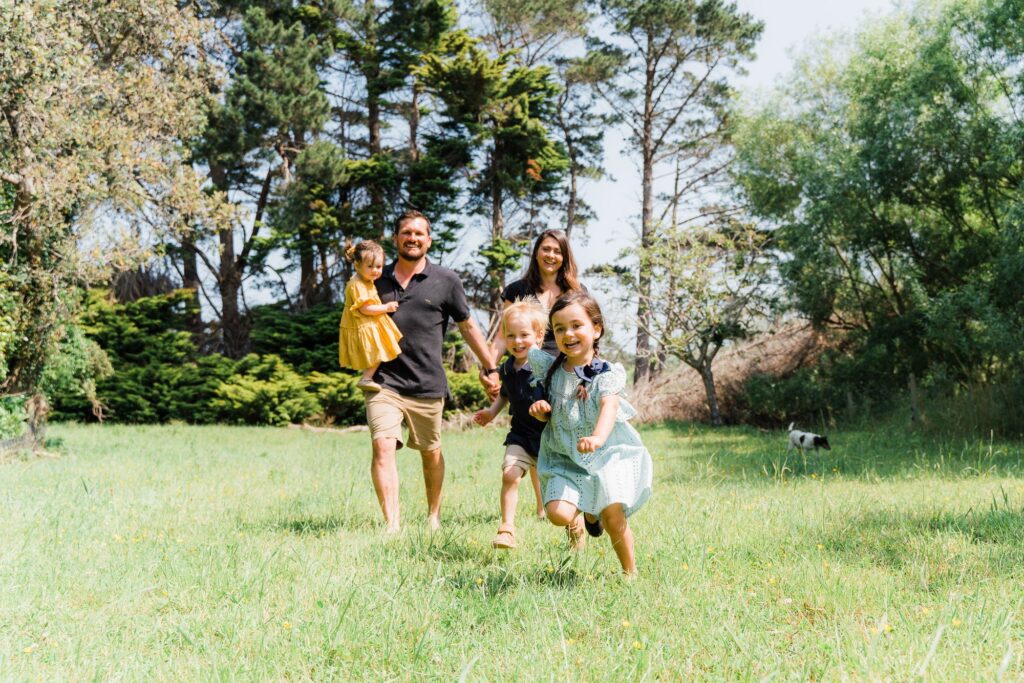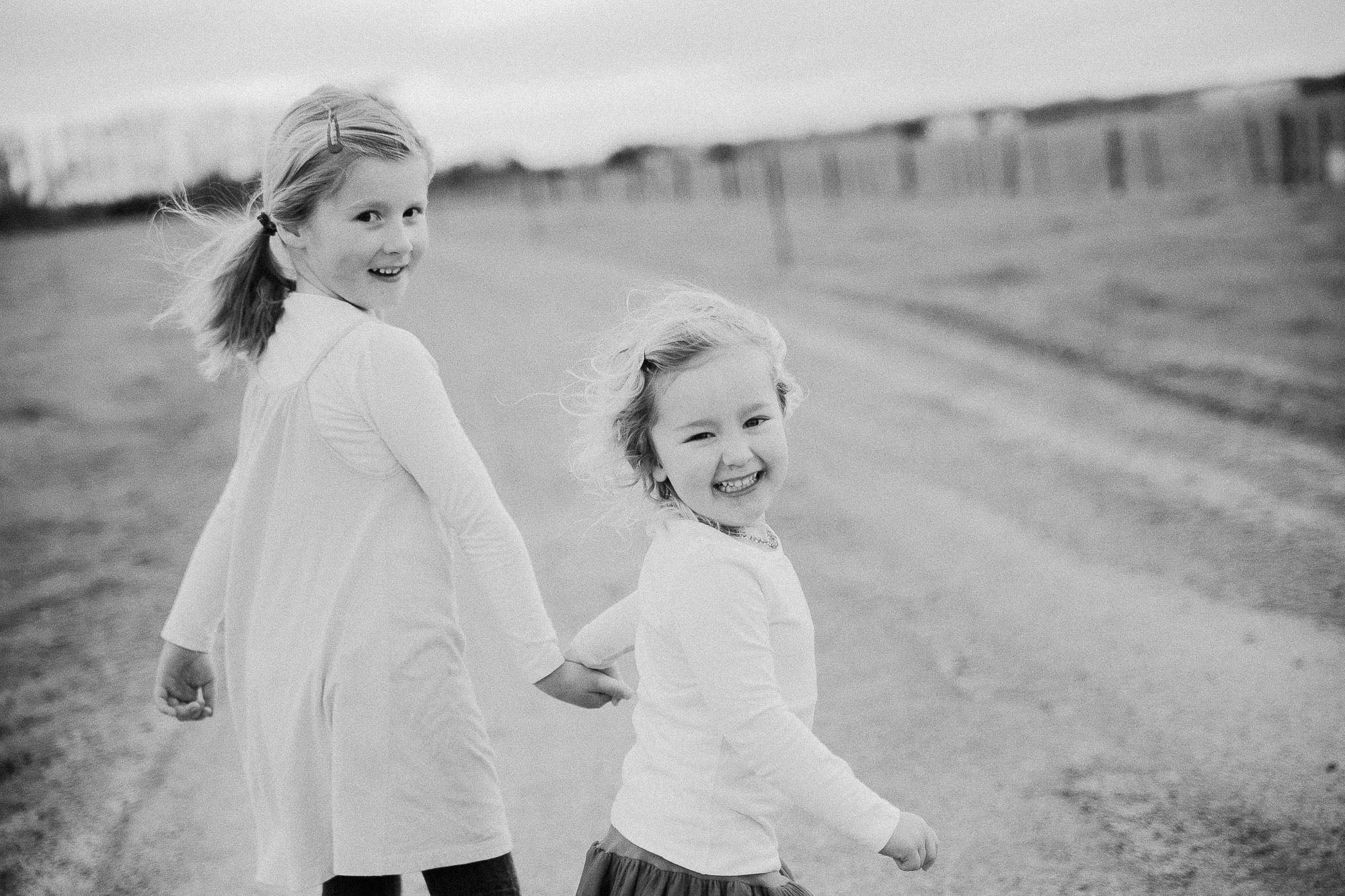
Short answer: Book around the nap, not the light. Feed everyone beforehand, lower your expectations from “everyone smiling” to “everyone present”, and bring a bribe you have never used before. A toddler session that works is usually twenty minutes of gold buried inside an hour of chaos. That is normal.
We have three children, thirteen, nine and six, and we have twice completely failed to photograph our own, because at the critical moment the two-year-old lay face down on the floor and became structurally part of the building. So this is not theory. It is field research by two photographers who have been kicked in the jaw by their own child while holding a camera.
The one rule that matters: time it around the nap
Everything else on this page is optional. This is not.
Book your session for the window when your toddler is at their best, and be brutally honest about when that is. For most it is mid-morning, roughly an hour after breakfast and well before the nap. For some it is late afternoon after the nap, before the 5pm collapse.
Families sometimes push for sunset because the light is beautiful. But 6pm light on a wrecked two-year-old produces beautiful photographs of a child screaming. We would rather shoot at 10am with a child who is pleased to be alive.
If the nap and the light genuinely cannot be reconciled, come into the studio, where we make our own light and the clock stops mattering. That is half the reason the studio exists.
Food is a photographic tool
A hungry toddler cannot be reasoned with, charmed, or photographed. Feed them before you arrive — properly, not a rice cracker in the car.
Then bring snacks, and think about what they are. The right snack is dry, single-coloured, and eaten in small pieces. Sultanas, plain crackers, dry cereal.
The wrong snacks, from grim experience: chocolate, blueberries, anything with red dye, and yoghurt pouches, which are a weapon. If you want to see a photographer’s soul leave their body, hand a toddler a yoghurt pouch in front of a white backdrop.
Bribery works. Here is how to do it properly
Let us be clear: we are pro-bribery. Anyone who tells you to get honest smiles through pure connection has never tried to photograph a tired three-year-old on a Saturday.
But most bribery fails, and it fails for predictable reasons. The rules:
- Make it novel. The bribe must be something they have never had before. A familiar treat is worth nothing. A tiny unopened packet of something strange is worth ten minutes of cooperation.
- Keep it out of sight. The moment it is visible, it becomes the only thing in the universe, and you will get twelve frames of a child staring intently off-camera at a lolly.
- Pay after, never during. “One more photo then you can have it” works. Handing it over mid-session ends the session.
- Small and quick. A single mini marshmallow. Not a biscuit that takes four minutes and coats the hands.
- Non-staining, always. A blue-lipped toddler is a retouching bill.
- Don’t promise what you cannot deliver. If you say “then we’ll go to the park”, we are going to the park. They will remember. They always remember.
Our house favourite, for the record: a very small container of something noisy — a shaker, a bell. Sound holds a toddler’s attention longer than sugar and does not go on their face.
Stop asking them to smile
“Say cheese” produces a facial expression that exists nowhere else in human life. Toddlers do it with eyes closed and teeth clenched, like a tiny estate agent.
What actually works is giving them something to do or react to. Ask a two-year-old where their nose is. Ask them to whisper a secret to Mum. Ask them who has the smelliest feet in the family — that one is undefeated and it gets the parents laughing too, which is half the photograph.
We go further into this in getting kids to actually smile, but the principle is simple: a real expression is a reaction to something real. Your job is to supply the something.
What “a good session” actually looks like
Here is the realistic shape of an hour with a toddler, and knowing it in advance will save your nerves.
| Roughly | What is happening |
|---|---|
| First 10 minutes | Suspicion. They are working out who we are and whether the room is safe. We shoot very little. |
| 10–20 minutes | Exploration. They are off. This is when we get the honest running-around frames. |
| 20–40 minutes | The gold. They have forgotten the camera and they are being themselves. Most of your best photographs come from here. |
| 40–55 minutes | Fading. We get the group shot done now, quickly, while it is still possible. |
| 55 minutes onwards | Whatever happens, happens. We stop pushing. |
Notice the group shot sits at forty minutes, not at five. Parents often want it first, out of the way. It does not work — at five minutes the toddler is still suspicious of us, and a suspicious child does not lean into anyone.
Things to bring, and one thing to leave behind
- A spare outfit. Not because we expect a disaster — because there will be one.
- Wipes.
- A comfort object, but hand it to us to hide once we start. Half the time the best photograph of the day is the one where they finally get it back.
- Water. A thirsty toddler is a cross toddler.
- A second adult, if at all possible. Someone whose only job is to be ready with a wipe, a sultana, or a catch.
Leave the iPad at home. It is tempting, and it does buy quiet, but a screen switches a toddler’s face off completely. There is a particular slack-jawed look it produces and it is unphotographable. Also, taking it away afterwards starts a war right before we need them cheerful.
When it goes wrong anyway
Sometimes it does. The child screams from the door and does not stop.
What we do: nothing, for a bit. We put the camera down, sit on the floor, and talk to the parents about something else. Most meltdowns burn out in ten minutes if three anxious adults are not actively managing them. The worst thing in the room is a parent hissing “please, just smile, we paid for this” — the toddler feels the tension, and it makes everything worse.
And if it truly cannot be rescued, we stop and rebook. That has happened, and it is not a failure. It is one bad morning in a child’s life, and it is a smaller problem than a set of photographs where everyone looks miserable.
What is the plan for the first five minutes in the door?
Most parents think the session starts when the camera comes up. For a toddler it starts when the door opens, and what happens in those first minutes shapes the following hour. Here is what helps.
Do not hand the child over, and do not push them forward. Hold their hand or carry them, say hello to us calmly, and let them look. A toddler decides whether a place is safe by watching how their parents behave in it. If you relax, they borrow it.
Let them explore before anyone says “photo”. A toddler who has walked the room, touched a cushion and found the door handle is much easier than one who is placed on a mark. We may leave the camera down for several minutes. That is deliberate.
Keep your own greeting low-key. Please resist the urge to announce “this is the nice lady and she wants to take your picture”. Say nothing about the picture at all. We will join in whatever they are doing and the photographs follow from that.
Choose who goes first. If you have one toddler and a calmer older child, we start with the older one, because a toddler who watches a sibling being photographed without incident often wants a turn. If the toddler is the only child, we start with a parent holding them, since contact is the safest place.
Which tantrum is it, and what do we do about it?
Not every meltdown is the same, and the right response differs. Here is a simple guide, with the usual caveat that you know your child and we do not.
| What you see | Usually means | What tends to help |
|---|---|---|
| Crying with arms up | Wants contact | Pick them up, let a parent hold them, and photograph the two together |
| Dropping to the floor and going stiff | Overwhelmed or protesting | Wait, say little, and let the energy pass before trying again |
| Running away laughing | Playing | Follow it. This is often the best part of the session |
| Flat, quiet and clingy | Tired or unwell | Stop, offer water, and consider rebooking |
| Refusing one person only | A preference, not a crisis | Photograph with the person they will accept, then ask the other to stand near |
If your child seems unwell rather than difficult, call it. A feverish toddler is not going to give you a good session, and no studio should expect one. Rebook rather than push through.
How do I get everyone in one frame without a battle?
The family group shot is the one most parents mention on the phone. A few approaches that work better than “look at the camera”.
- Sit on the floor. A toddler held on a lap, with the family clustered around on a rug, is lower and calmer than everyone standing in a line.
- Give the toddler the job of the middle. They sit or are held in the centre and everyone leans in around them. It feels like the family is looking at them, which is the point.
- Take it in short bursts. Three frames, a break for a run, three more. Stopping when the child is still cooperative beats waiting until they have given up.
- Ask a grandparent or friend to stand behind us. A familiar face over our shoulder gets eyes in roughly the right direction without anyone shouting.
- Do not count down. “One, two, three” announces that the performance starts now, and a toddler will freeze on cue.
- Confirm the child’s nap and meal times before choosing a slot.
- Keep the plan simple: one outfit change at most.
- Decide which adult is the child’s safe place during the session.
- Bring a familiar sound-making toy and keep it out of sight.
- Agree beforehand that nobody pleads for a smile.
- Know the limit: if the child is done, you will say so.
One last thing on trying again. If the morning did not work, a second try a few weeks later often goes much better, because toddlers change fast. A child who clung to you at two and a half may be running at the camera at three.
Common questions
My toddler is going through a shy phase. Should I wait?
No. Shyness at two or three is a stage, not a problem, and it will still be there in three months wearing different clothes. A good photographer works with it — shy children often give the most tender photographs, because the picture becomes about them burrowing into a parent’s shoulder, which is exactly what this age really looks like.
Should I warn them beforehand or just turn up?
Warn them, lightly, a day or two out. Frame it as going to meet someone with a big camera, not as an important occasion where they must behave. Too much build-up creates pressure they cannot process, and a week of reminders guarantees a performance rather than a child.
What if they refuse to look at the camera at all?
Then we shoot around it, and honestly some of the best frames come from exactly this. A toddler looking at their mother’s face rather than at us is a better photograph than a forced one. We will still get eye contact — usually by accident, usually when they turn to check we are still there.
Can we do an outdoor session with a toddler?
Yes, and running is a real advantage outdoors. The catch is that a park is full of things more interesting than us, so you get less control and more chasing. Contained spots work far better than big open ones. It is worth weighing against the studio option if the nap window is tight.
How do I look relaxed when I’m stressed about my child’s behaviour?
You mostly cannot fake it, so the fix is to stop being responsible for the outcome. Once you accept that the session working is our problem rather than yours, your face changes. The parents who get the best photographs of themselves are the ones who gave up managing at the ten-minute mark.
The photograph you will actually keep
Here is what we have learned, from our own three as much as from anyone else’s. The frame families end up printing large is almost never the tidy one where all four are looking at the lens.
It is the one where the toddler has gone rigid mid-tantrum and the older sibling is laughing at them. It is the blurred one from the moment before somebody caught a falling child. Those photographs are the true document of what this year was like in your house, and in ten years they will be worth more to you than a perfect line-up.
So come in with low expectations and a pocket full of sultanas, and let us chase the real thing. If you want to talk through your own child’s timing before you pick a slot, tell us their nap schedule — genuinely, that is the first thing we ask — and we will build the session around it.
Family portraits that belong on the wall
Relaxed, unhurried sessions, photographed, printed and framed for the wall you walk past every day.