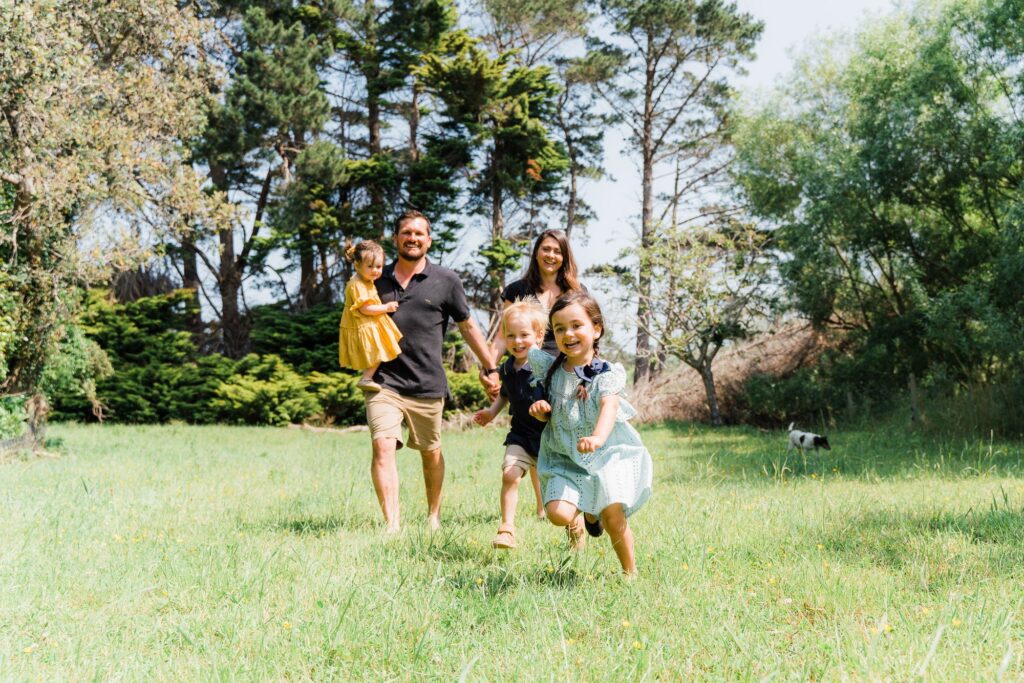
Short answer: Pick one person’s outfit first, usually whoever is fussiest, then build everyone else around two or three colours drawn from it. Stick to soft, muted tones and fabrics that suit the Sydney weather on the day — linen and cotton in summer, wool and knits from May. Avoid logos, slogans and bright white.
Wardrobe is the thing families spend three weeks worrying about and fifteen minutes actually solving. The reason it feels hard is that most advice starts with a rule (“wear neutrals!”) instead of a method. So here is the method we give our clients, then the Sydney part — because what works in a Melbourne studio in July does not survive a 34-degree February afternoon in Epping.
Start with one person, not with a colour scheme
Choose the hardest person to dress. That is usually a teenager with opinions, or a mother who wants to like how she looks and has three dresses she trusts. Put them in the outfit that genuinely suits them.
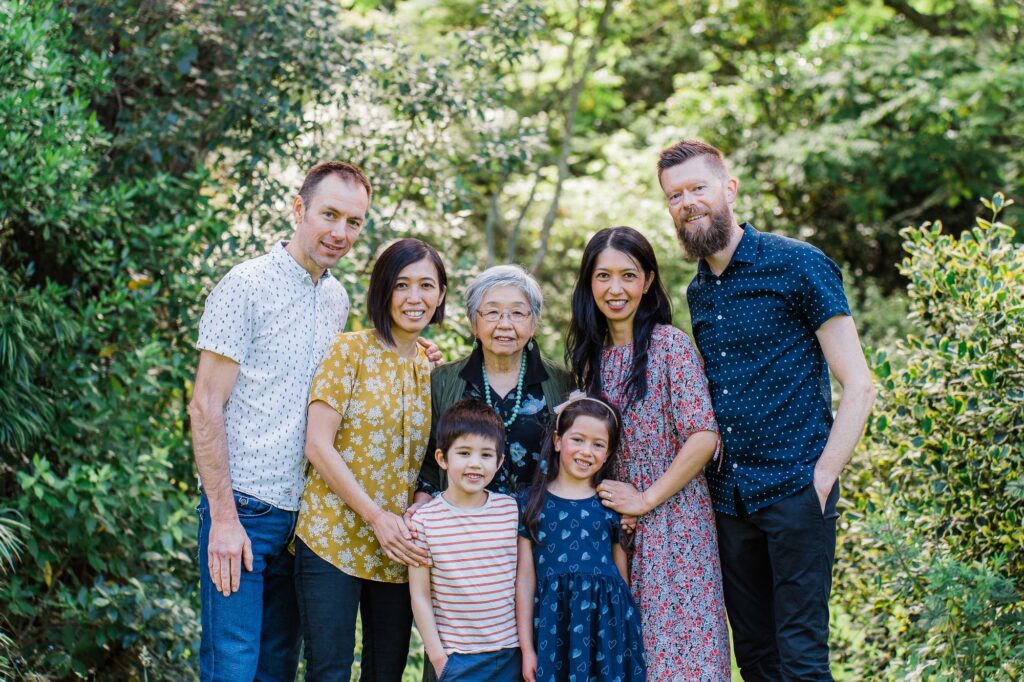
Now pull two or three colours out of that garment — including the quiet ones, the thread in the weave, the tone of the buttons — and dress everybody else from that small set. Not matching. Drawing from the same well.
This works because the eye reads a family portrait as one shape. When five outfits come from one palette, you look at faces. When they don’t, you look at clothes.
What colours photograph well on Sydney skin tones
Muted beats bright, almost always. Sage, dusty blue, oatmeal, clay, charcoal, deep olive, warm grey, soft rust. Those sit down quietly and let skin be the brightest thing in the frame.
Two specifics worth knowing:
- Pure white is harder than people expect. Under Sydney sun it blows out, and on camera it will often be the first thing to lose detail. Cream, ivory and bone do the same job without the fight.
- Strong red and electric blue bounce. A red shirt throws colour up onto the chin and neck of whoever wears it, and onto whoever is standing pressed against them. In a tight family group that shows.
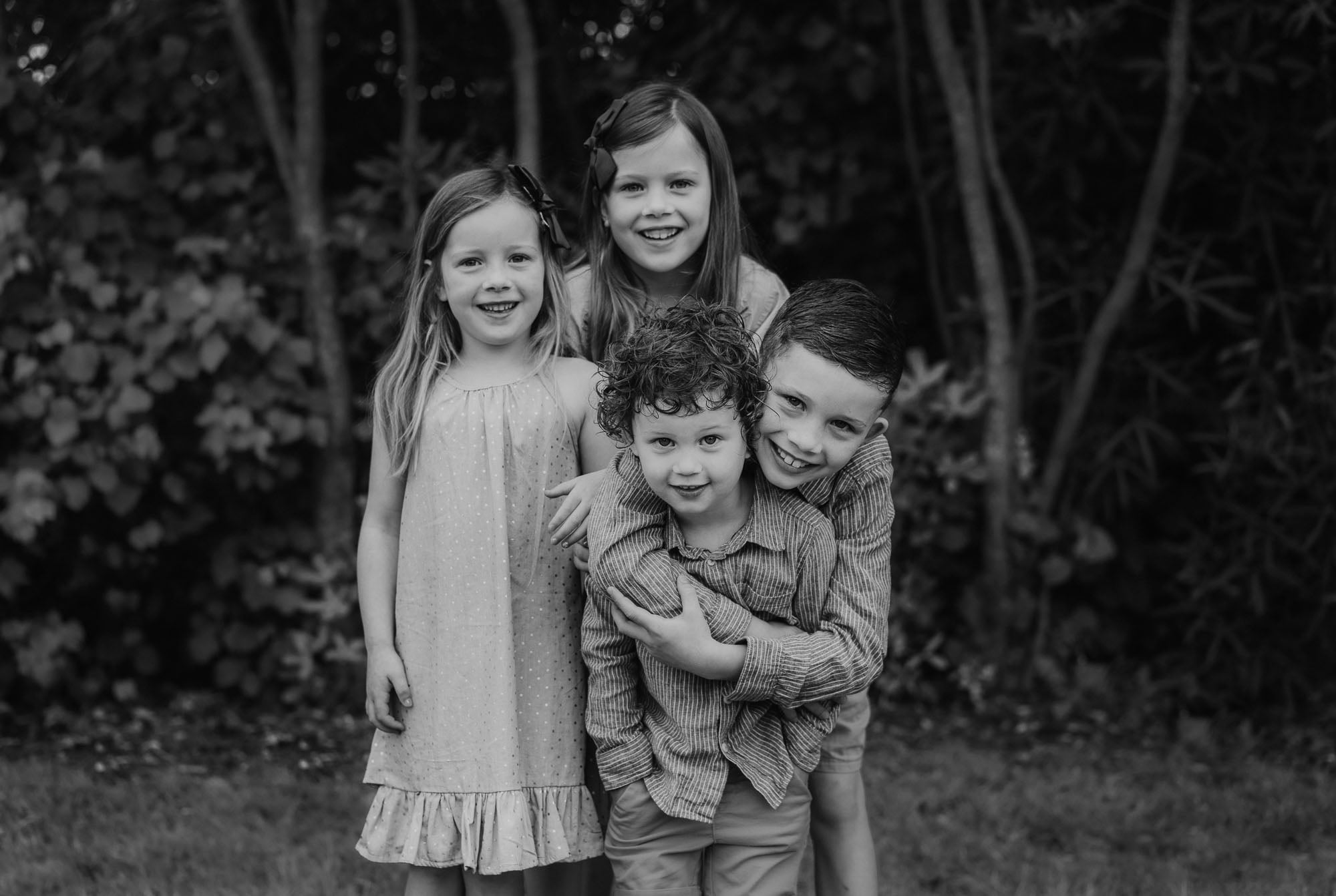
Black is fine, and flattering, but in a full-length portrait a family all in black can merge into one dark mass. Break it with texture — a knit, a linen, something with a surface.
Summer: what linen actually does at 30 degrees
Everyone recommends linen for a Sydney summer shoot, and it is the right call for one reason and the wrong call for another.
Right: it breathes, it does not cling, and it photographs beautifully because the fibre catches light unevenly and reads as texture rather than a flat surface.
Wrong, or at least worth knowing: linen creases the moment anyone sits down. By the time you have driven from Hornsby with two kids in the back, a linen dress has a map across the lap. That is not a disaster — it reads as natural in a relaxed portrait — but if you want a crisp look, choose a linen-cotton blend instead, which holds its shape far better and still breathes.
Other January and February notes:
- Sydney humidity does what it does to hair. Bring what you need. Anyone with fine hair should plan for it to be flatter by the third outfit.
- Grey marle shows sweat faster than any other fabric in existence. Avoid it between December and March.
- Sleeveless is comfortable but many mothers tell us afterwards they wish they had worn a sleeve. A loose three-quarter sleeve in a light fabric is cooler than it sounds.
- Sandals over thongs. Thongs photograph like thongs.
Autumn: the easiest season to dress for
April and May are Sydney’s kindest months for clothing. It is warm enough for bare arms at midday and cool enough for a light knit at five, which means layers are honest rather than decorative.
Autumn colours also happen to be the ones that already photograph well — rust, mustard, olive, warm brown, brick. If you have been putting off a family shoot because nobody can agree on what to wear, this is the season where the answer is easiest, and it is also when the light is at its best. We go into that separately in the best time of year to shoot in Sydney.
Winter and spring: knits, and the wind
Sydney winter is mild enough that families over-dress for it and then cook under studio lights. Indoors, a knit is plenty — a chunky cable jumper in oatmeal or grey is one of the best things you can put a child in, because the texture reads gorgeously and it hides a multitude of spilled breakfasts.
Outdoors in July, particularly anywhere near water or in open parkland, wind is the real variable. Long flowing dresses are wonderful in a photograph and miserable to manage in a 20-knot southerly. If you love the flowing look, pick a heavier fabric with some weight in the hem.
Spring brings pollen and it brings light cotton. September and October are good for softer colours — pale blue, blush, stone — and it is the one time of year a floral print does not feel out of place, as long as only one person in the group wears one.
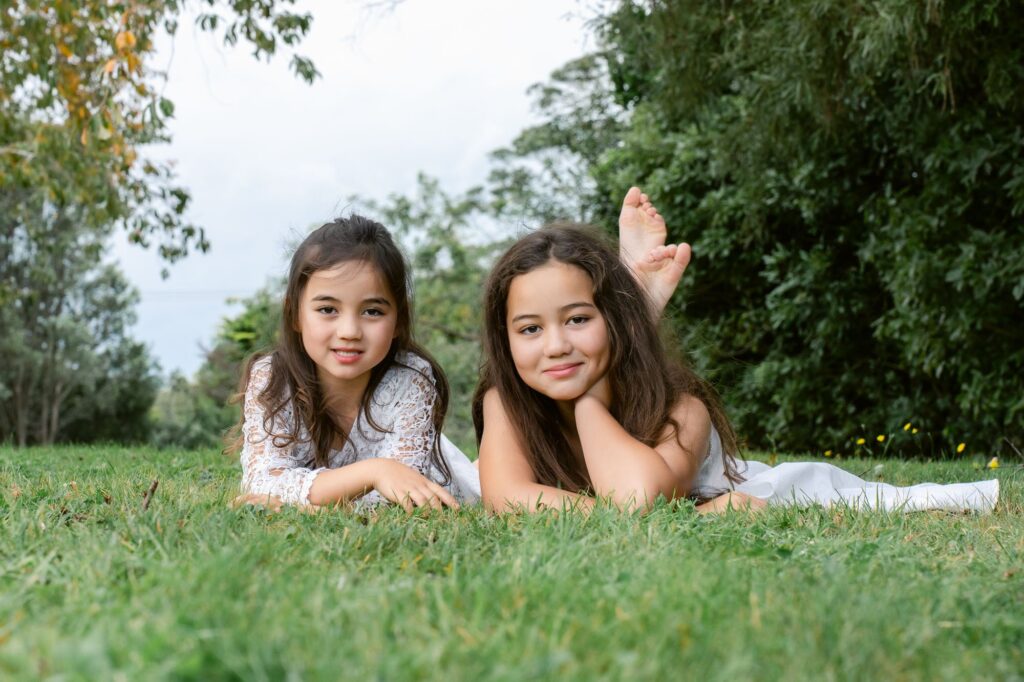
What to put small children in
Comfort wins. A child in a stiff collar spends the whole session pulling at it, and you will see that in every frame.
Practical things that make a difference: no character prints, no shoes that light up, and an outfit they have worn at least once before. New clothes on a small child are a reliable way to buy yourself forty minutes of fidgeting. If your toddler is likely to be a challenge on the day anyway, our survival guide for photographing toddlers covers the rest of it.
Pack a second top for anyone under six. Milk, dirt and a dropped sultana are all more likely than not.
What to leave at home
- Logos and slogans — they date the photograph instantly and pull the eye straight to a chest.
- Neon anything, which reflects onto every face nearby.
- Busy small patterns like fine stripes and small checks, which can shimmer oddly on camera.
- Sunglasses on heads, hair ties on wrists, and the smart watch nobody notices until the photographs come back.
- Strap marks. If you are shooting in February, stay out of the sun in a singlet the week before.
What do you wear when the family is a mix of ages and tempers?
Picture two adults, a nine-year-old who refuses buttons, a four-year-old who will wear exactly one pair of leggings, and a grandmother joining for one frame. Nobody will agree on a palette, so the job is not agreement. It is limiting the damage.
Start with the child who has the strongest views and let them keep one thing. If it is the leggings, choose the top to suit them. You are buying cooperation for the next hour, and a child who feels listened to behaves differently on camera.
Dress the grandmother next. She often has one good outfit she trusts, and building around it is easier than asking her to change. The adults adjust last. Parents are the most flexible people in the group and usually care least about their own clothes.
Why do outfits look different once printed?
Screens mislead you about colour. A phone can lighten a mid-tone shirt and blend two similar colours together. On paper a deep green sits darker and a soft coral turns a shade more orange. The safest check is to hold the garments side by side near a window in daylight, which is closer to what a print will show.
Contrast is the other quiet trap. If one person is in dark navy and the person beside them is in cream, the eye jumps between them and the picture feels split. Keep the lightest and darkest garments reasonably close together. A family in mid-tones reads as one group. One very dark outfit and one very pale one read as two.
A black-and-white test on your phone
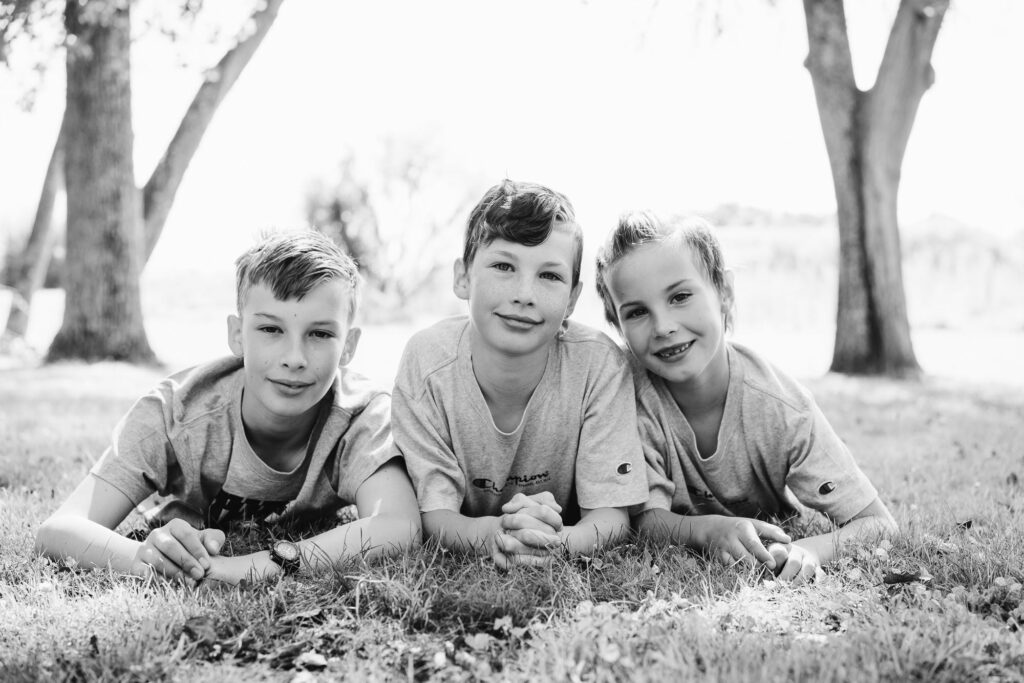
Lay the outfits on the bed, take one photo, then switch it to black and white. Whatever turns into a hole or a glare will do the same in a print. If everything blends into similar greys, you are close. If one outfit vanishes into a dark patch, swap it.
Family situations that need their own plan
A baby in the group. Plain, soft and a little loose. Choose the baby’s outfit first and dress the adults to sit near it. Bring a spare.
Teenagers. Offer two options you have already approved. A free choice can mean a graphic tee, and no choice means a sullen face in every frame. Two is the sweet spot.
Dad and the shirt. Many fathers own one good collared shirt and a drawer of tees. A plain, well-fitting shirt in a muted colour with the sleeves rolled to the forearm works almost every time.
A mix of heights. Look at the line of heads, not the line of feet. Layered knits in different weights help smaller people hold their own beside taller ones.
A pregnant mum. Choose a fabric with some stretch and a length that skims, not a tight style that rides up when she sits.
A checklist for the night before
- Lay every outfit on a bed in daylight and compare them side by side.
- Check each garment for pulls, bobbles and stains in good light, not lamplight.
- Iron or steam everything, including the children’s tops.
- Cut off tags and test collars for scratchiness before a child finds them.
- Pack a spare top for each child of school age or younger.
- Put the shoes in the car, not the hallway.
- Send us a phone photo of the whole lot and ask for one honest swap.
The question that settles most arguments
When two people disagree about an outfit, ask which of them will be glad of the choice in ten years. Nobody looks back at a family portrait and wishes the shirt had been brighter. They wish they had looked relaxed, and people in clothes they like look relaxed.
So if the nine-year-old will only wear the grey hoodie, let her. Dress the rest of you in colours that sit beside grey, such as stone, soft green and warm brown, and the hoodie becomes the anchor of the group rather than the odd one out. Print that frame large and the hoodie will make it more hers than any dress could have.
Common questions
Should everyone wear the same colour?
No. Identical outfits flatten a family into a uniform and the photographs look staged. Aim for a shared palette with variety inside it — one person in the strongest tone, everyone else in quieter versions of it. Think of it like a room: one feature colour, several supporting ones.
How many outfits should we bring?
Two is the sweet spot for most families. One considered set for the main portraits, one relaxed set — jeans, knits, bare feet — for the looser frames. Three is possible in a longer session, but every change costs you ten minutes and some of the children’s goodwill.
Can I wear patterns at all?
Yes, on one person. A single patterned dress or shirt in a group of solids gives the photograph somewhere to rest. Two patterns start arguing with each other. Keep the scale reasonably large, because tiny repeating patterns can behave strangely at certain distances.
What about make-up and hair in Sydney humidity?
Go lighter than you would for an evening out — heavy foundation catches studio light and reads as a mask. For hair, anything that relies on staying perfectly smooth will not last a February session. Something with a bit of natural movement built in survives the day far better.
We are shooting outdoors. Does that change anything?
It changes shoes and hems. Grass, sand and bush tracks eat pale fabric, and long hems drag. Otherwise the palette logic is the same, though outdoor greens push everything slightly cool, so warm tones — clay, camel, rust — tend to sit better against Sydney bushland than cool blues do.
Lay it all out on the bed the night before
This is the step that saves families on the morning. Put every outfit side by side on a bed, in the order you will wear them, and photograph the lot with your phone.
Two things happen. You immediately see the one garment that does not belong — it will be obvious, and it is usually the brightest thing there. And you have a picture you can send us.
We are genuinely happy to look. Send the phone shot through to the studio before your session and we will tell you what to swap, what to keep, and which outfit to shoot first while everyone still looks pressed. It takes us two minutes and it saves you a fortnight of second-guessing.
Family portraits that belong on the wall
Relaxed, unhurried sessions, photographed, printed and framed for the wall you walk past every day.