Short answer: Choose a studio when you need certainty — a fixed date, controlled light, and a clean timeless result that will still look right in twenty years. Choose outdoors when you want Sydney itself in the picture: bush, beach, open sky. Studio removes weather risk. Outdoors buys atmosphere you cannot build indoors.
This is the decision families spend the longest on and it is genuinely a real choice, not a sales question. We shoot both. What follows is how we help people pick, including the cases where we talk someone out of what they first asked for.
What you are really choosing between
Strip away the marketing and there are two variables: control and context.
A studio gives you total control. The light is the same at 9am as at 4pm, on a storm day as on a clear one. Nothing behind your family will date the photograph — no parked car, no fashion in the background, no fence that gets replaced in 2031. What you lose is the world. There is no sense of where you live.
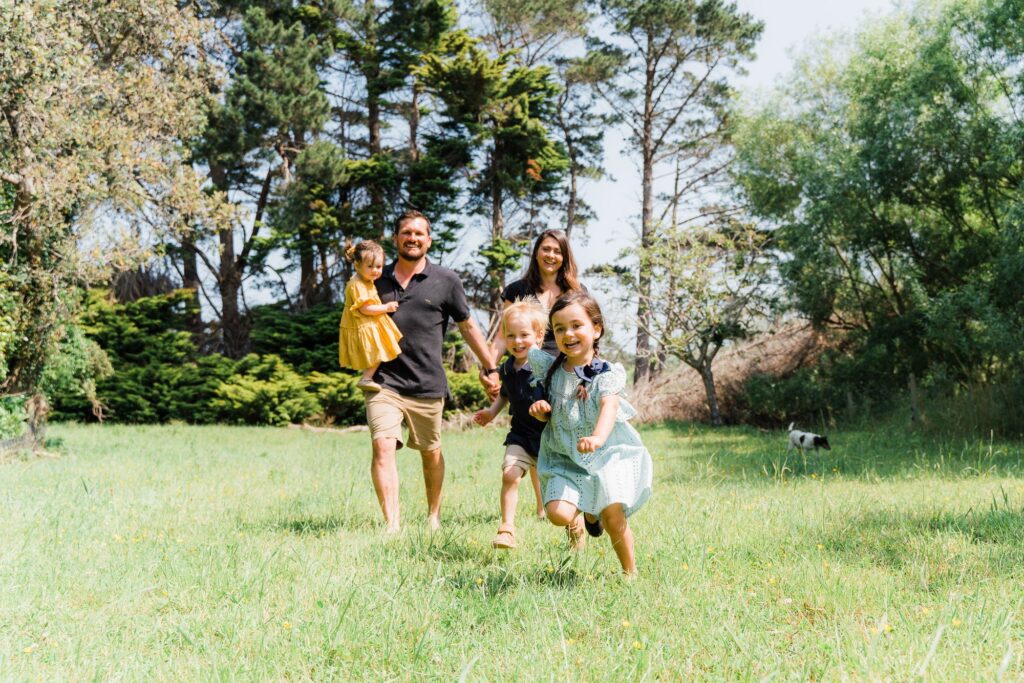
Outdoors gives you context and takes the control away. You get Sydney light through gum trees, you get your children running, you get a photograph that says something about a particular place and a particular afternoon. In exchange, the wind picks up, the sun goes behind a cloud, and the beach you chose turns out to have a birthday party on it.
Neither is better. They are different products.
Side by side
| Studio | Outdoor | |
|---|---|---|
| Weather risk | None | Real — expect one reschedule in every six or seven bookings |
| Best time of day | Any | The hour before sunset, or early morning |
| Typical length | 45–90 minutes | 60–90 minutes, plus travel and parking |
| Outfit changes | Easy — there is a change room | Awkward, usually limited to one |
| Very young children | Contained, warm, nothing to run towards | More freedom, more distraction, more chasing |
| Look | Clean, sculpted, timeless; black and white is at its strongest | Airy, natural, seasonal; strong sense of place |
| Wall art | Excellent — backgrounds sit quietly behind faces | Excellent for big statement pieces where the landscape is part of the story |
When we recommend the studio
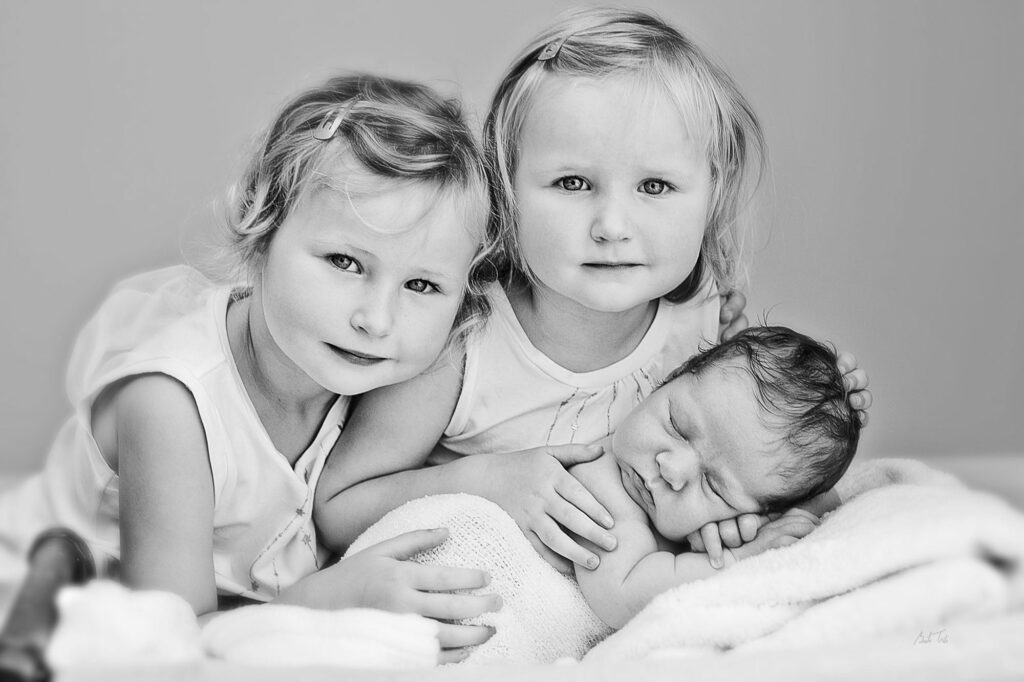
- There is a baby or a newborn involved. Warmth, no wind, a nappy change two metres away, and grandparents who can sit down.
- The date cannot move. Family flying in from overseas, a milestone birthday, someone unwell. A studio booking simply happens.
- You want the portrait to be about faces. If the finished piece is destined for a hallway and needs to work forever, a controlled background is doing you a favour.
- Somebody hates being photographed. Counter-intuitive, but true. Outdoors there are strangers watching. In our room in Epping there is nobody but us.
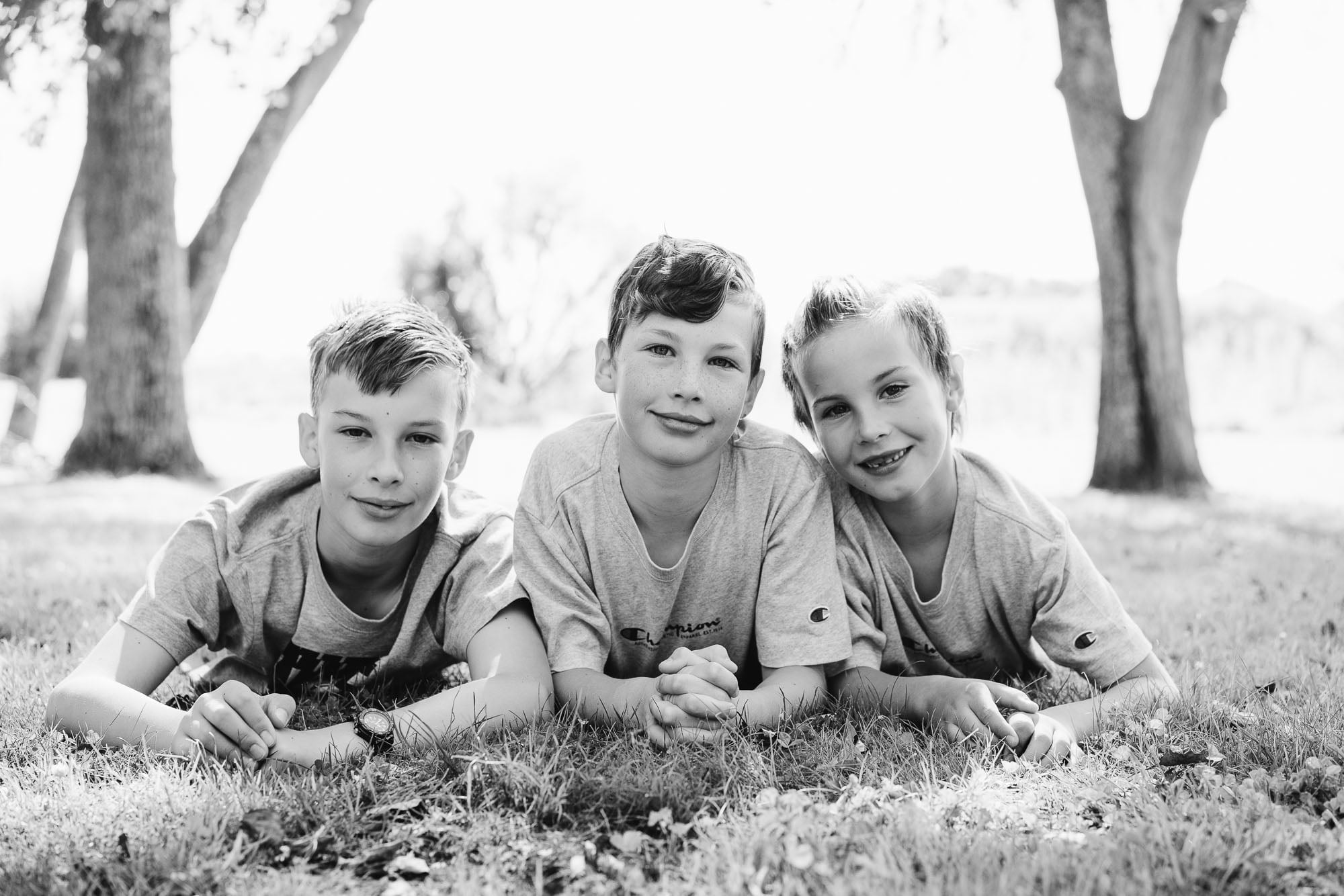
- You want real black and white. Proper monochrome portraiture depends on shaping light exactly, and you cannot ask the sun to move two feet to the left.
When we recommend outdoors
- Your children are between about three and ten. This age group photographs best in motion, and outdoors gives them somewhere to go.
- The place matters. The park you walk to every Sunday, the beach where you got engaged, the bush track behind the house you are about to sell. That is a photograph a studio cannot make.
- You want the big, open, light-filled look — long grass, sky, distance behind the group.
- Someone in the family is claustrophobic about being “posed”. A walk photographs very differently from a stand.
- Dogs. Honestly. Dogs are much happier outside and it shows.
If you go outdoors, location choice does a lot of the work — we keep a short list of northern Sydney spots we actually use in our locations guide, chosen mostly for parking, shade and where the sun sits at 5pm.
The weather risk, priced honestly
People underrate this until it happens to them. An outdoor booking in Sydney carries a genuine chance of moving, and the cost is rarely money — it is logistics. Four adults took an afternoon off. Someone flew in. A grandparent is only here for nine days.
Ask any outdoor photographer these three questions before you book:
- How many days before do you make the call?
- Is there a fee to reschedule for weather?
- What is the wet-weather fallback, and is it included?
The third one is the important one. A studio fallback that is included costs you nothing and removes the whole problem. A fallback that is “we will find a covered spot” means shooting under a park shelter in flat grey light, which is not the same photograph at all.
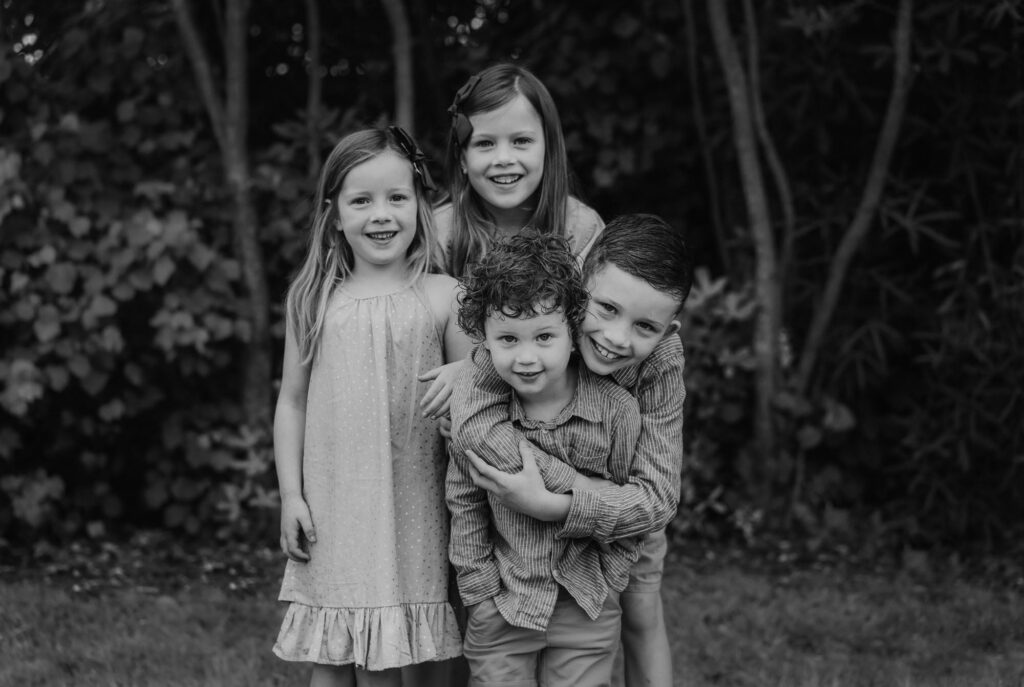
What about doing both?
It is possible, and for some families it is the right answer, but be clear-eyed about it. A session split across two settings means travel in the middle, a car with everyone’s clothes in it, and roughly a third less shooting time in each place. With children under five that trade rarely pays.
Where it works well: older children, a longer booking, and a studio close to the outdoor location so the transfer is ten minutes rather than forty. Where it fails: a toddler who used all their goodwill on the first half.
The better version of “both” is usually two sessions a year or two apart, one of each. Different photographs, both properly done.
What the finished photographs actually look like
This is the part most comparison articles skip, and it is the part that should decide it.
A studio portrait is quiet. The background falls away, skin tones are exact, and the whole frame points at expression. Printed large it has real presence, and it never argues with the wall it hangs on. It is the photograph people notice in ten years and cannot date.
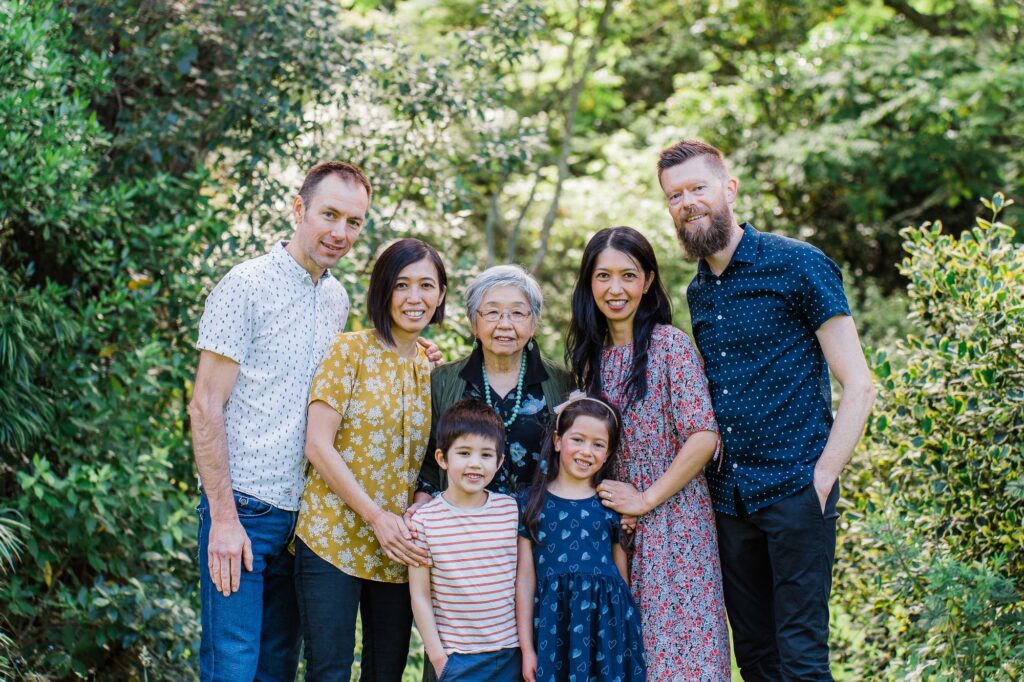
An outdoor photograph is louder and warmer. There is air in it, and colour from the season, and usually a bit of movement. It tells you it was a Sunday in May. Printed large it carries a room in a different way — you are hanging a moment rather than a portrait.
Look at your walls. If the answer is “faces”, come to the studio. If the answer is “that afternoon”, go outside.
How do I plan the day if we choose outdoors?
The mistakes with outdoor sessions are almost never about the photographer. They are about the hours around the session. Here is the order we suggest.
Work back from the time of the shoot. If you are booked for the hour before sunset, in the cooler months that can mean a start as early as late afternoon. Children who skip a nap to be ready become tired and cranky about forty minutes in, which is exactly when the light turns golden. Feed them properly first, then pack a small snack for the car.
Decide about the outfit change before you leave, not at the park. Long grass, a muddy edge and a toddler’s grip on a sandwich do not leave pale clothes pale for long. If you want a second look, one adult packs it in a tote and the change happens in the car, with doors shut and a plan for who holds whom.
Plan the walk from the car. A family carrying a pram, a bag and a grandparent’s walking stick does not want a fifteen-minute hike to the “perfect” spot. Ask us for a meeting point near parking, and agree who carries what before anyone gets out of the car.
What does a worked studio morning look like for a family with a baby?
Imagine a family of five arriving at the Epping studio at ten on a Saturday. They live in Ryde, so the drive is short. The baby has fed, the five-year-old is hungry for morning tea and the nine-year-old is in a bad mood about being photographed at all.
- Arrival. Everyone sits in the warm room for a few minutes. The nine-year-old gets to look at the lights and ask questions, which is often enough to defuse the mood.
- First setup. The whole family on a low bench, close and simple. This is the safe frame, taken early before anyone tires.
- Smaller groups. Parents with the baby. The two older children together. The five-year-old on dad’s shoulders, because it makes her laugh.
- Black and white. A quieter setup, with the family close and the light shaped from one side. Many families choose one of these to hang large.
- Break. Feeding time or morning tea, and nobody minds.
- Last frames. Whatever worked best, repeated while the children still have a little energy.
Nothing in that morning depended on the weather, parking or daylight, and that is the real gift of a studio. It is also a lot calmer for the parent who is carrying the nappy bag.
How do I decide if we are split on it?
Families often disagree. One parent wants the beach, the other wants something tidy for the hallway. Try these questions, written down by each of you separately before you compare answers.
- Where will the biggest print hang, and what colour is that wall?
- Do we want the photograph to say where we live, or who we are?
- What is the youngest child like when they are away from home?
- Who is the least keen person, and which setting do they find easier?
- Can we cope with moving the date if it rains?
Compare the answers. If most point the same way, you have your decision. If they split evenly, the least keen person’s answer decides, because a relaxed reluctant adult photographs better than a tense enthusiastic one.
It also helps to read how the two styles work for a specific stage of life. For toddlers, you can find more in family photos with toddlers.
A planning checklist for either choice
- One adult confirmed as the organiser, with everyone’s arrival time
- Clothes chosen and ironed two days before
- Children fed and toileted before leaving home
- Weather call date agreed in writing, if you are going outdoors
- Parking or meeting point confirmed
- Tissues, wipes and a hairbrush in one bag
- Your biggest wall measured, so we can talk about print size
- A spare adult for any child who needs a break
The last line of this is a small one. Measure that wall before the session. Whichever setting you choose, the print is what you will live with for years, and a two-minute measurement taken with a tape and a friend is the best preparation you can do.
Common questions
Is one more expensive than the other?
Roughly comparable in Sydney. Studio sessions carry the overhead of the space; outdoor sessions carry travel, scouting and the reschedule risk, and some photographers add a location fee. The bigger driver of what you pay is the session-fee-versus-prints structure, which we unpack in our pricing guide.
Can we bring props or furniture to a studio session?
Things with meaning, yes — a grandfather’s chair, an instrument someone actually plays, a blanket that has been in the family. Things bought for the occasion, no. Props that mean nothing photograph as clutter and they pull attention off the people.
Does a studio look too formal for a relaxed family?
Only if the photographer works that way. Formal comes from posing and light, not from being indoors. We spend a good part of every studio session with people sitting on the floor, and some of the loosest frames we make happen between the setups when nobody thinks we are shooting.
What about our own home?
In-home sits somewhere between the two: the context is genuinely yours, but the light is whatever your windows happen to give on the day, and most Sydney living rooms are smaller than they feel. It suits newborns and very young families best, where the house is the point.
Which one handles a big group better?
Outdoors, generally. Ten or more people need physical room and a background that can take a wide spread, and there is no substitute for open space. A studio can absolutely handle a large group, but it needs to be planned rather than assumed.
Decide on risk first, then look
Here is the order we would use. Ask first how much weather risk your family can absorb. If the honest answer is none — because of the date, the visitors, the baby, the logistics — then the decision is already made and the look question does not arise. Book the studio and enjoy not watching the radar all week.
If you can absorb a reschedule, then and only then choose on look, and choose by imagining the finished print on your wall rather than by scrolling more portfolios.
Not sure which side you fall on? Tell us your date, your youngest child’s age and whether anyone is flying in. That is usually enough for us to tell you which way to go, and we will say so plainly even when it is the cheaper option. Send us those three things and we will answer the same day.
Family portraits that belong on the wall
Relaxed, unhurried sessions, photographed, printed and framed for the wall you walk past every day.