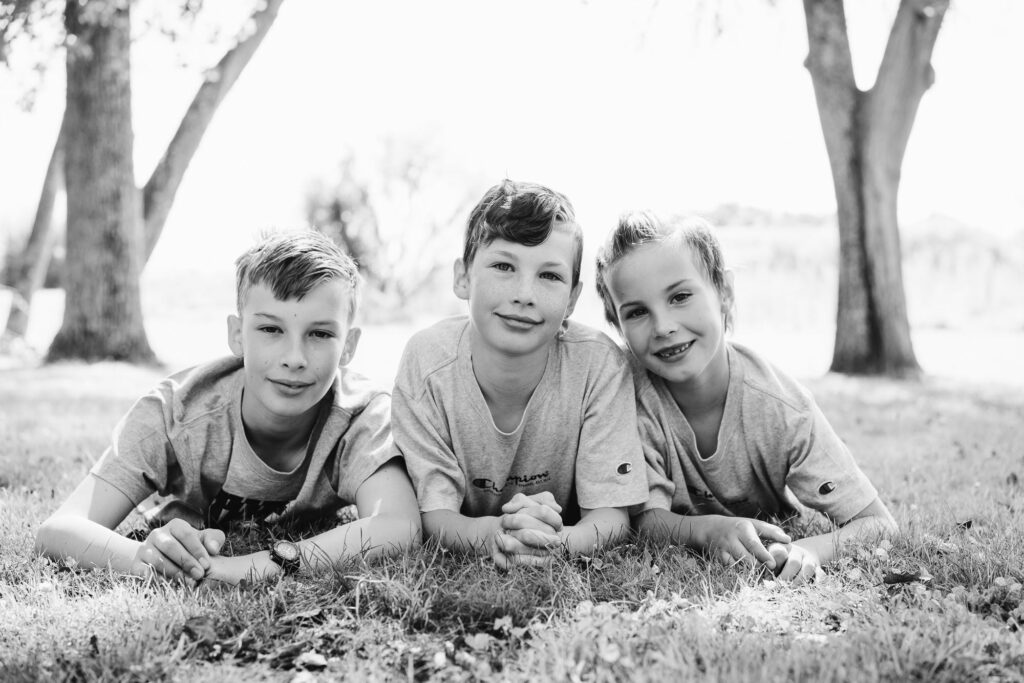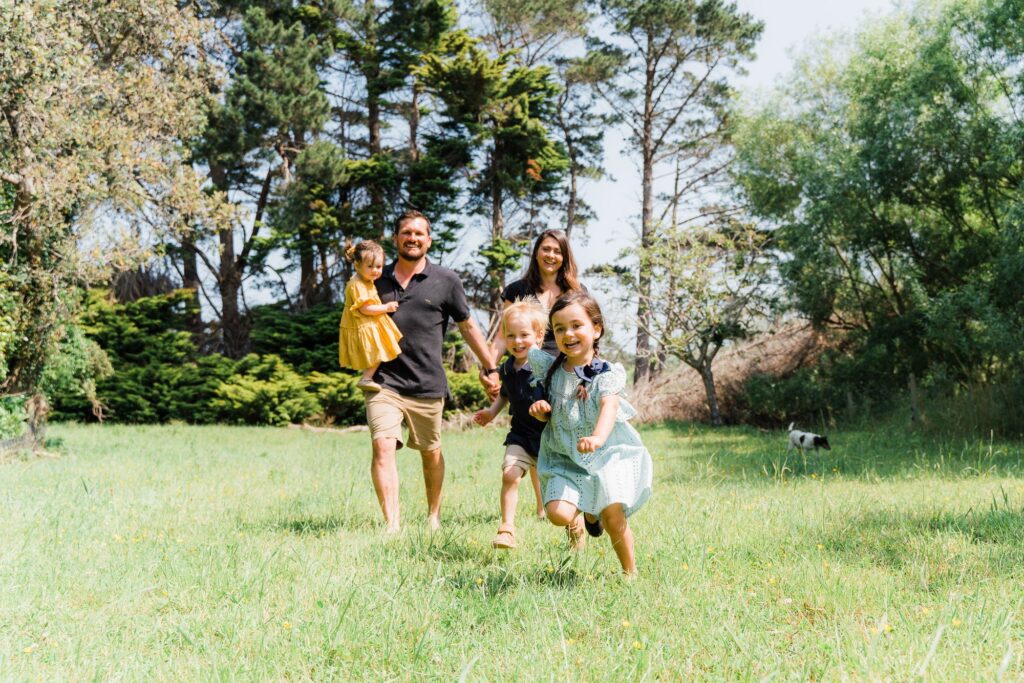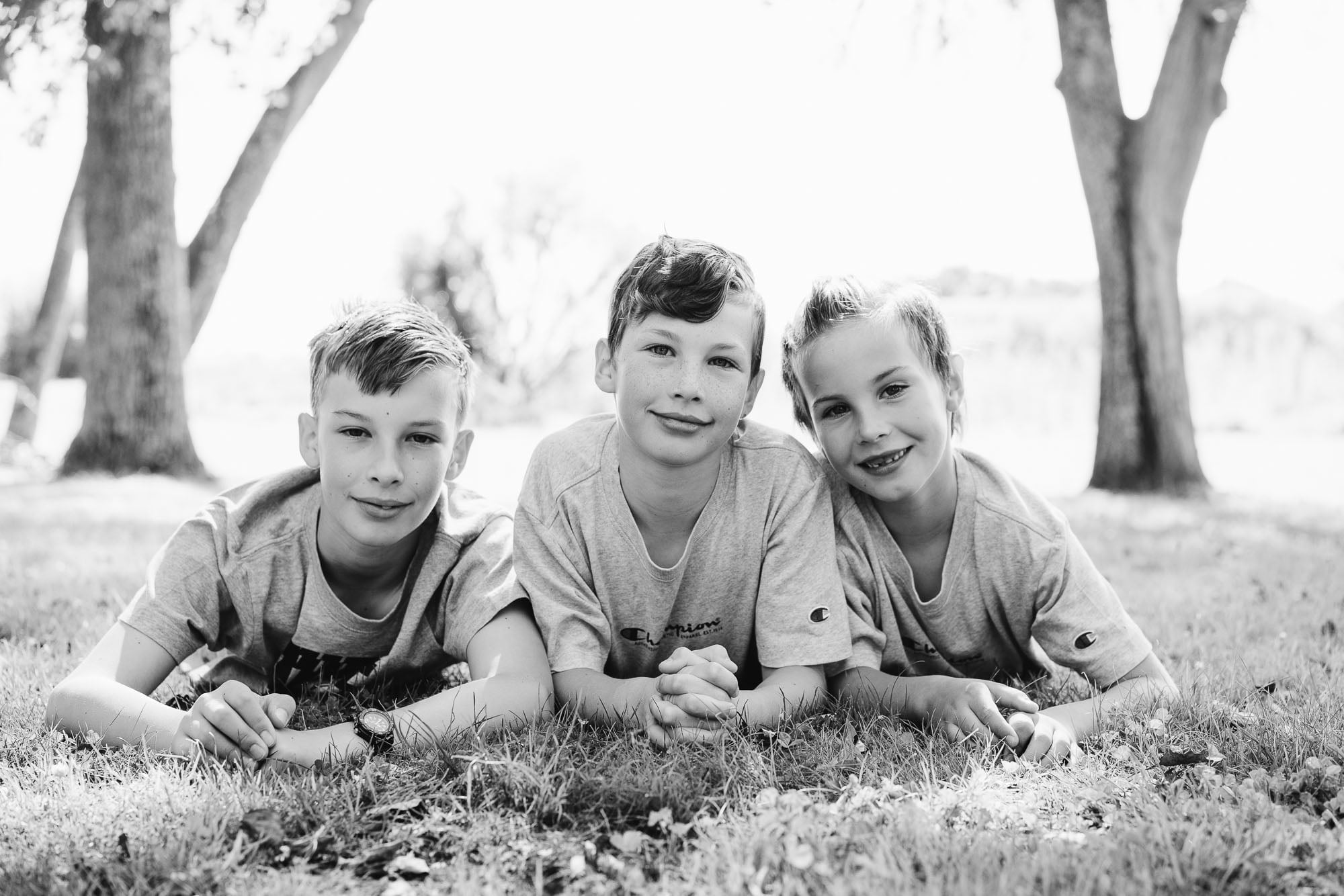
Short answer: Most families do not need photos every year. Book when something has visibly changed — a baby, a school start, a growth spurt, a grandparent visiting. For families with children under five that lands roughly every twelve months anyway. After about age eight, every two or three years is plenty.
We will lose a bit of money saying this, but the annual family portrait is mostly a studio marketing idea. It caught on because a yearly rhythm is easy to sell and easy to remind people about, not because twelve months is a meaningful unit of change in a family.
What actually makes a portrait worth taking
Difference. If the photo on your wall and the people in your kitchen no longer match, it is time. If they still match, another session gives you a near-duplicate of something you already own and probably have not printed yet.
Ask yourself one question before booking: what has changed since the last set? If the honest answer is “the date”, wait.
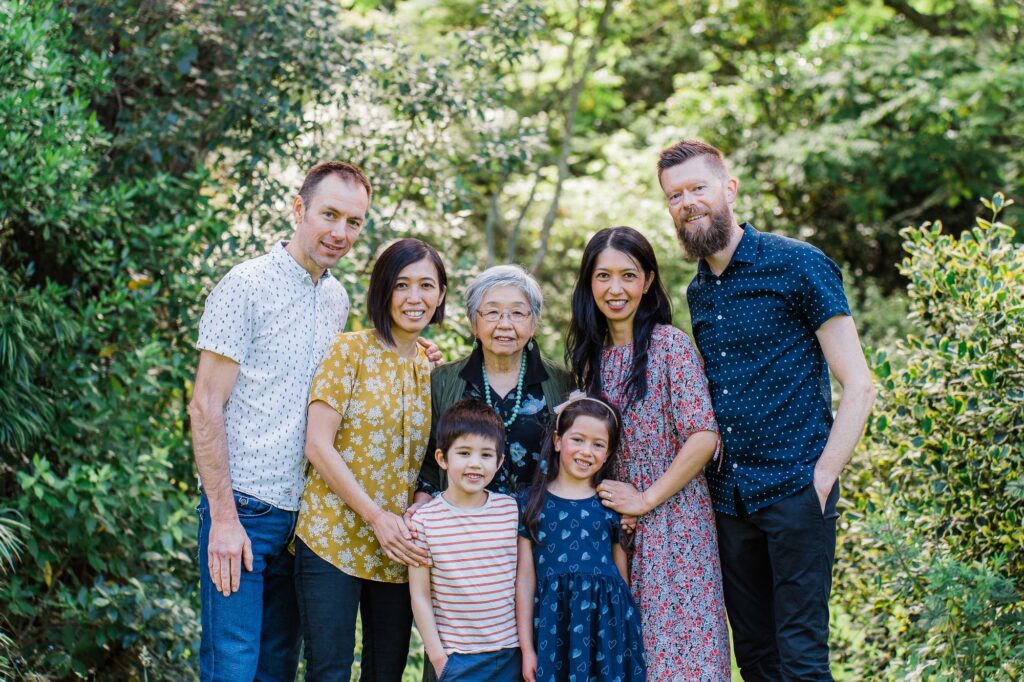
Change moves fastest at the start
A baby is unrecognisable at six weeks, six months and twelve months. A three-year-old looks different by kindergarten. A nine-year-old looks roughly the same at ten. A fourteen-year-old changes fast again, and then stops.
So the honest frequency is not a straight line — it is heavy at the beginning, thin through the middle primary years, and worth another look in early high school.
| Youngest child’s age | Sensible gap | Why |
|---|---|---|
| 0–12 months | 2–3 sessions in the year | The face changes completely; nothing else in life moves this fast |
| 1–5 years | About every 12 months | Height, hair, speech, personality — all visibly different |
| 6–11 years | Every 2–3 years | Slow years. Teeth and haircuts, mostly |
| 12–17 years | Every 2 years, then before they leave | Growth restarts, and time is running out |
| Adult children | When everyone is in the same city | Availability is the constraint, not appearance |
Book to a trigger, not to a calendar
A date in a diary is easy to ignore. An event is not. The families who end up with a proper record of their years are the ones who attached photos to something real:
- A new baby joining the household
- The first day of school, or the last year of primary
- Grandparents flying in from overseas
- Moving house, especially into a home with a wall you finally want to fill
- A separation, a remarriage, a blended family becoming one
- Someone getting a diagnosis
- A child who has just cut off long hair, or grown 10cm in a winter
None of those are annual. That is the point.
The case for going yearly anyway
We are not going to pretend the annual habit has no value. There are two situations where we think it genuinely earns its place.
The first is a family with three or more kids under eight. Something is always different, and a year is about the interval at which that difference is obvious rather than subtle.
The second is when the pictures are the family’s actual ritual — the same wall, the same month, a row of frames that grows. That is not a photography decision, it is a family tradition, and traditions do not need to be justified. If that is you, book it and enjoy it.
Why more sessions rarely means more photos on the wall
Here is the pattern we see. A family shoots every year, downloads the gallery every year, and has nothing hanging. Six sessions in, they have 900 files and one framed print from 2019.
Frequency without printing is just storage. We would rather a family came every three years and put something real on the wall each time. If you are talking yourself into another session, check first whether the last one is finished — chosen, printed, hung. Our piece on why printing matters more than the shoot makes the case at length.
What a smaller session does to the maths
Part of why people delay is that a full sitting feels like an event. It does not have to be. A short sitting — twenty minutes, one setup, a handful of frames — is the right tool for a year where not much has changed but you want the kids’ heights on record.
Our $295 Mini Love Sitting exists for exactly that gap. It is not a replacement for a full family session, and we are upfront about what it is and is not in our honest look at mini sessions.
How do you decide between a full session, a short one and none?
Every family hits the same wobble around the second year: should we book again, or have we done enough? A simple three-question test settles it, and none of the questions is about the calendar.
Question one: could a stranger tell the difference between your last photos and now? Show someone the most recent family portrait and then stand the family in front of them. If they notice a haircut, a missing tooth, a taller child, the answer is yes. If they would struggle, wait.
Question two: is there a single person who changes the group? A new baby, a teenager who has just shot up, a grandfather who is no longer as strong as he was. One person changing is often a stronger reason than everyone slowly ageing together.
Question three: is the last set finished? By finished we mean chosen, printed and on a wall. If the answer is no, finish that first. A new session on top of an unfinished one just adds to the pile.
If you answer yes, yes and yes, book a full session. If you answer yes to the first but the last set is unfinished, spend the next fortnight on the last set and then book. If you answer no to all three, skip the year and enjoy having less to organise.
A worked example: three children across six years
Consider a family with children aged 2, 5 and 9. We will call them the Lims, to make the example easier to follow. It is a made-up family to show the thinking, not a real client.
This year. The youngest is two, which is a big change zone: speech, personality, running. A family session makes sense, even though last year’s was only twelve months ago. Everything about the two-year-old is different.
Next year. The middle child starts school. A good moment for a portrait of each child on their own, plus a family frame, because the school uniform will date the photograph in the best possible way.
The year after. Less has changed. The family might skip, or do something short and informal, just to mark heights and teeth.
Three years from now. The eldest is entering high school and the youngest is about to start school. Two big milestones in one year. A good time for a full family session, with a print going on the wall that reflects the new stage.
Six years from now. The eldest is in the middle of high school. Growth has restarted and the window before they leave home is closing. This is a session worth planning early, because teenagers have timetables of their own.
That plan takes in four sessions across six years, not six. The gaps are where life happens, and the sessions are placed around the changes. Your own plan will look different. What matters is that each booking has a reason you can say out loud.
If you are working through the very first year, see our first-year baby photography plan, where the intervals are tighter than anywhere else in childhood.
Keeping a thread running between sessions
A row of portraits looks best when something repeats. Without a repeating element, the set looks like a collection of unrelated photographs. With one, the changes between frames become the point.
- The same wall. Hang each new print in the same spot, or on the same wall, so the history builds visually.
- The same colour family for clothing. Not matching outfits, but a shared palette, so the set holds together.
- The same pose, once. One frame at each session, with everyone standing in the same order. After a few years it becomes the most valued picture in the house.
- The same time of year. It does not have to be exact, but a similar season makes the changes easier to see.
Here is a short checklist to run through before you book the next one.
- Find the last family portrait and note the date
- List what has changed since: people, hair, height, home, school
- Check whether the last set was chosen, printed and hung
- Decide whether this is a full session or a short update
- Pick a trigger: a birthday, a school start, a visit, a move
- Note the wall the new print will go on, with rough measurements
- Ask each family member if there is one frame they would like included
As a cheap record in the meantime, pick a door frame in the house and stand each child against it on the same day every year, with a pencil mark and the date. It costs nothing, it takes a minute, and years later that doorway tells the story of how fast the gaps between sessions really went.
Common questions
Is once a year actually wrong?
Not wrong, just often unnecessary. For a family with a toddler it is about right. For a family whose youngest is nine, a yearly booking usually produces a set that looks like last year’s with a different jumper. Skip a year and the next set will feel like it was worth doing.
We have not had photos taken in seven years. Is that a problem?
You have missed some things, and we are not going to pretend otherwise. But the fix is one booking, not a catch-up plan. Photograph the family as it is now. Seven years from now, today will be the picture someone is glad exists.
Should each child get their own session too?
Individual portraits are worth doing at a couple of points — around school entry, and again in the mid-teens. Between those, an individual frame or two inside a family session covers it. You do not need a separate booking per child per year, whatever a school photo envelope implies.
Does it matter if we use a different photographer each time?
Only if you want the set to hang together. Three portraits in three different styles look like three unrelated photos on a wall. If a consistent row matters to you, stay with one studio; if each session is its own thing, it does not matter at all.
What time of year should we go, if we are only going occasionally?
Autumn, for outdoor work in Sydney — March to May gives the softest light and the least heat. If the session is in the studio the month matters far less, which is one reason infrequent bookers often prefer indoors.
So when should you book yours?
Look at the most recent photo of everyone in your family together. Not a phone snap — the last proper one. If the children in it would be embarrassed by their own hair, or if someone in it is no longer at home, the gap has already opened up.
Do not wait for a round number of years. Wait for the change, then move on it within a month or two, because the change is what you are photographing. When you spot one, email info@tzportraits.com and tell us what it is — we will tell you honestly whether it is worth a full sitting or a short one.
Family portraits that belong on the wall
Relaxed, unhurried sessions, photographed, printed and framed for the wall you walk past every day.