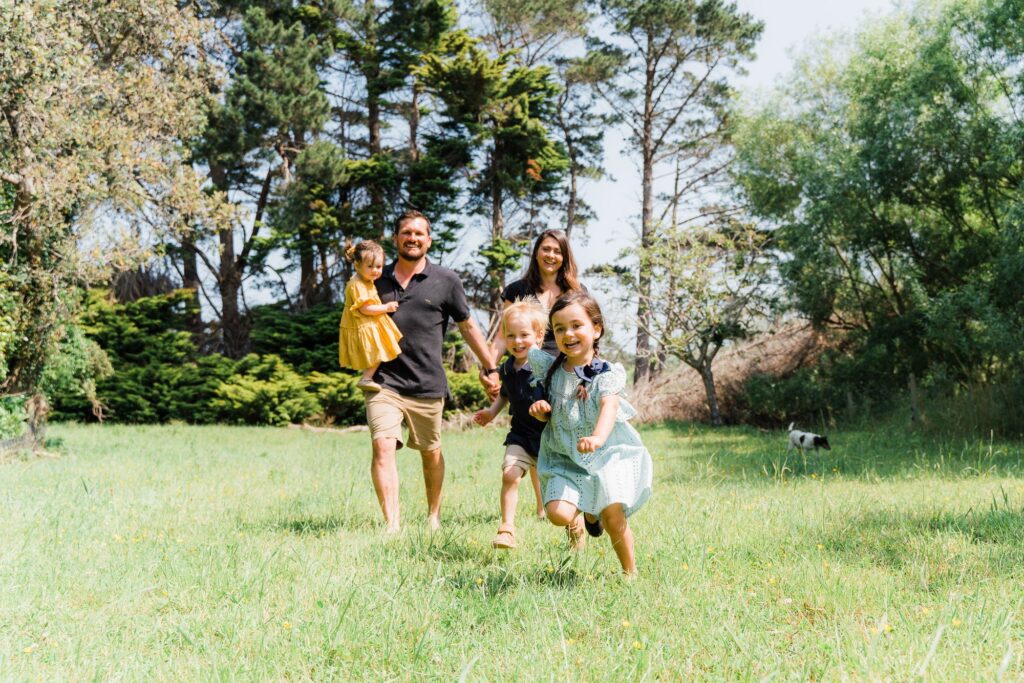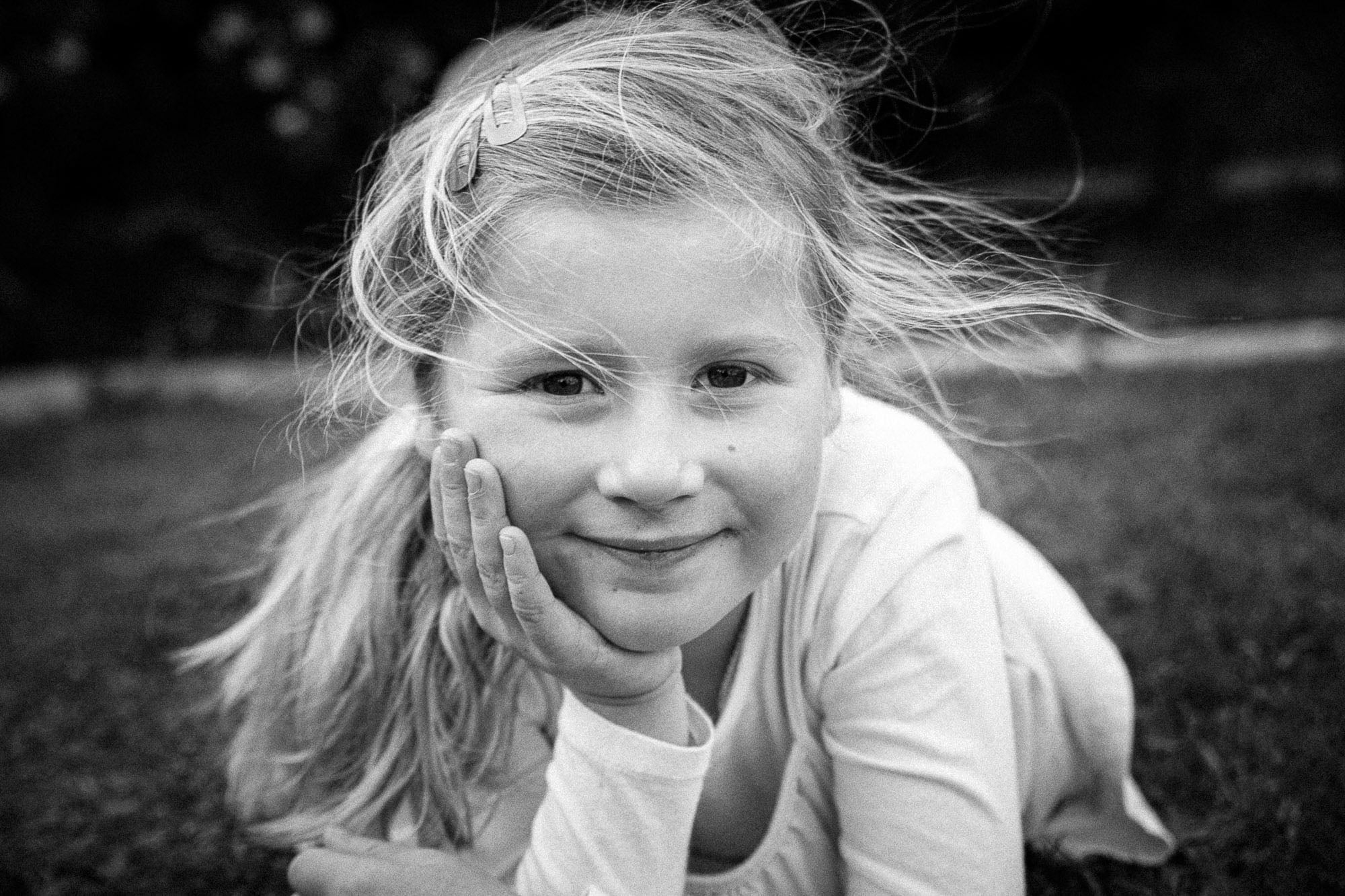
Short answer: Print your photos because a file needs someone to go looking for it and a print does not. Hard drives fail, phones get stolen, accounts close and file formats stop opening. Meanwhile nobody scrolls back three years. A framed portrait is seen every single day by accident.
We are going to argue for printing, and we should say up front that we sell prints, so you are entitled to discount us. Read the argument anyway. It does not depend on buying anything from us — a $40 frame from a shopping centre with a good photo in it beats a perfect file nobody opens.
The real problem is not storage, it is attention
Ask anyone with kids to show you a photo of their family from 2021. They will open the phone, tap into Photos, and start scrolling with their thumb. Thirty seconds later they are still scrolling. Usually they give up and show you something from last week instead.
That is the whole case in one gesture. The photos are not lost. They are simply unreachable in any practical sense, because reaching them requires a deliberate act nobody performs. Nine thousand images and no way in.
A print reverses that. Nobody decides to look at the portrait above the stairs. They look at it because they walk past it eleven times a day and their eye goes there. Over a year that is four thousand unplanned viewings of one photograph. Your camera roll will not get four thousand viewings in a decade.

Children read a printed portrait differently
This is the part we did not expect when we started photographing families. Our three are 13, 9 and 6, and the portraits on our own wall function as fact rather than sentiment. The kids know where they sit in the family, physically, because there is a picture of it at the top of the stairs.
Child psychologists have made a fair bit of this over the years — the general finding is that children who can see themselves inside a family group, displayed, tend to be steadier about where they belong. We are photographers, not researchers, so take that as reported rather than proven. What we can tell you is what parents report to us afterwards, which is that the six-year-old talks to the picture.
Every digital storage method has a failure mode
People hear “back it up” and think the problem is solved. It usually is not, because the backup has the same weakness as the original.
| Where the photos live | How it goes wrong |
|---|---|
| Phone only | Dropped in the surf at Narrabeen. Stolen at Chatswood station. No copy anywhere. |
| One external hard drive | Spinning drives die, and they die without warning. A drive in a drawer for six years may not spin up at all. |
| USB stick from the photographer | Ends up in the kitchen drawer with the batteries. Half of them are unreadable after five years. |
| Cloud account | Works well — until the card expires, the email address is abandoned, or the account is closed after a death and nobody has the password. |
| Social media | Compressed to a fraction of the original, and you are relying on a company outlasting your family. |
None of that is scaremongering. Every one of those is something a client has told us about while asking whether we still had their files. Sometimes we do.
The format problem nobody plans for
Here is the one that gets overlooked. Even a perfectly preserved file is only useful if something can open it in forty years.
If you have ever tried to open a .PICT from 1994, or a Word file from a version of Word that no longer exists, you know how this goes. RAW files are worse, because each camera manufacturer invents its own and then quietly stops supporting old ones. The file survives. The ability to read it does not.
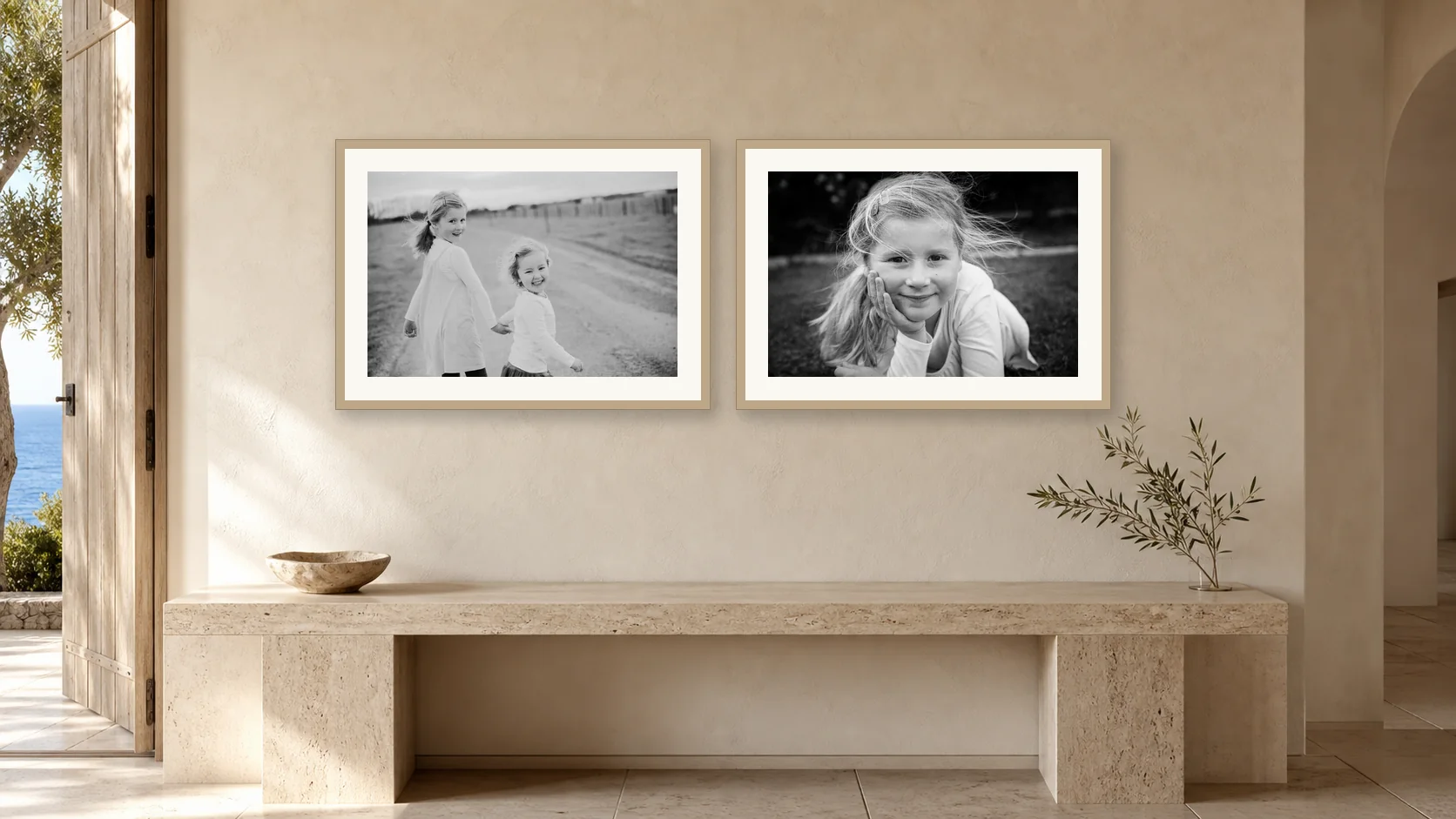
Paper has no version number. There is no software layer between the image and your eye. That is not nostalgia — it is a genuine technical advantage, and it is the reason archives still print things.
What we would actually do if you never bought a print from us
Genuinely, this list, in this order:
- Pick ten photos from the last year. Ten, not two hundred. The picking is the hard part and it is also the point.
- Get them printed at any decent lab as 8x10s. Cheap is fine.
- Put four on a wall and the rest in a drawer where somebody will find them.
- Once a year, order a small album of that year’s ten. Twenty years of that is a shelf your grandchildren will actually open.
- Keep the digital backup as well. This is not a choice between the two — files are for insurance, prints are for looking at.
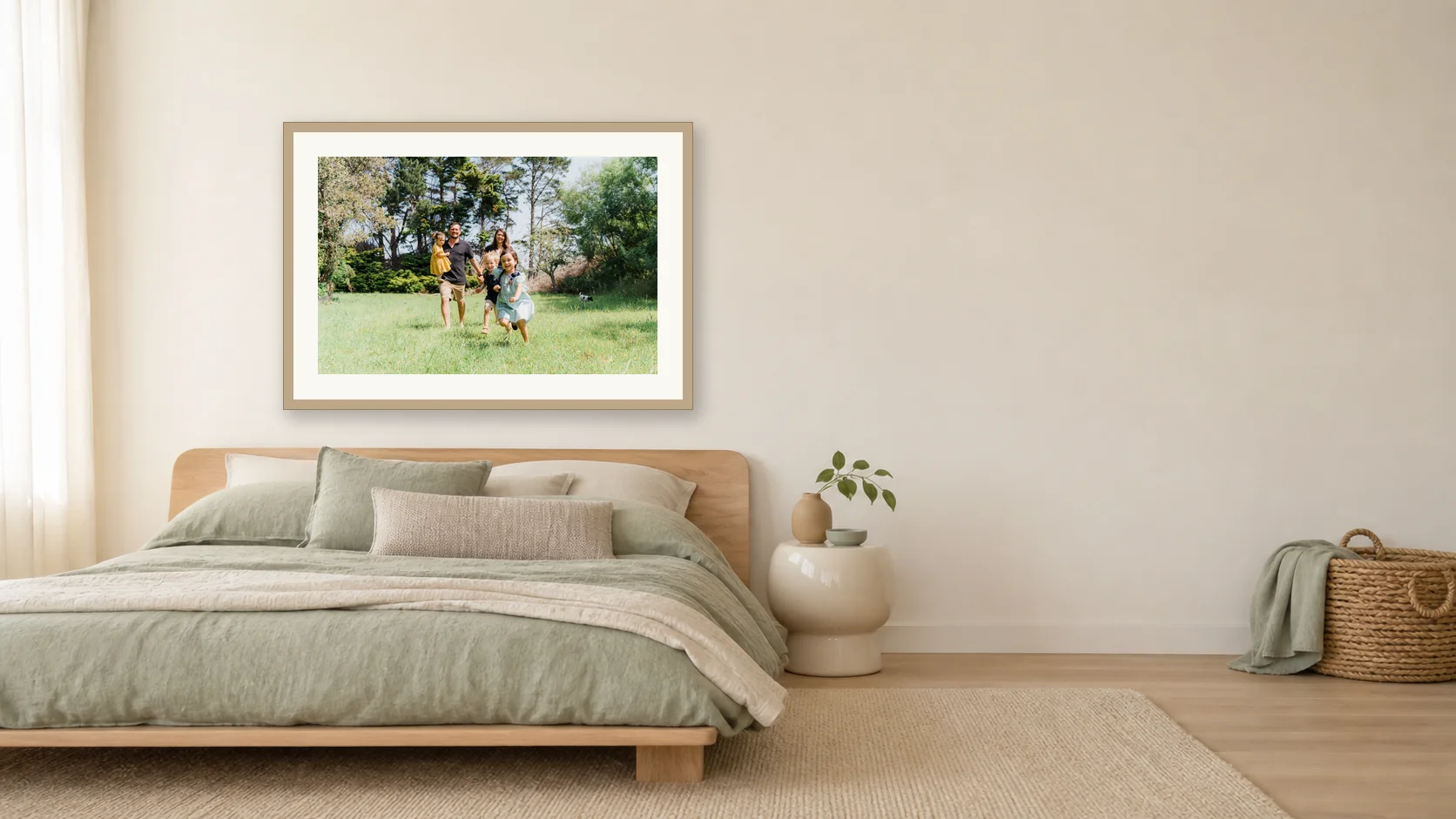
If you would like one big piece instead, that is a different exercise, and the mistake almost everyone makes is going too small. We have written about that in our wall art size guide, because a 40cm print above a three-seater sofa looks like a postage stamp and no amount of quality fixes it.
How do I choose which photos are worth printing?
Most people stall here, and it is the reason the camera roll stays a camera roll. The trick is to stop judging photos as photos and start judging them as things you will pass every day.
A photo suits a wall when it still works after you have seen it two hundred times. Big expressions wear out quickly. A child mid-shriek is hilarious on Tuesday and tiring by Christmas. Quieter pictures last longer: a hand holding a hand, a child looking at something outside the frame, a whole family sitting on a step with no one performing. If you cannot imagine glancing at it while the kettle boils, it is probably better in an album than on a wall.
Two further tests help. First, zoom in to the face on your phone. If the eyes are soft, no printer on earth will rescue it, and a small print will show the problem more cruelly than a screen does. Second, look at the edges. Phones often crop a photo to a squarer shape than a standard frame, so someone’s elbow or a head can vanish when you order. Check that nothing important lives in the outer tenth of the picture.
Why does my print look different from what I saw on screen?
It nearly always does, and the cause is ordinary. A screen shines light at you. A print only reflects the light in the room. So a photo that glowed on your phone can look darker and flatter on paper, particularly if you had the screen brightness turned up, which most of us do.
Three things catch people out.
- Brightness. Turn your screen down to a modest level before you judge a photo for printing. If it still looks good, it will print well.
- Shape. A phone photo and a standard print rarely share the same proportions, so the lab either crops or leaves a white border. Decide which you prefer before you order, not after the parcel arrives.
- Finish. A glossy surface shows reflections from a window or lamp and fingerprints from curious toddlers. A matt or lustre surface is easier to live with in a bright Sydney living room. If you are framing behind glass, the finish matters less, but the glass itself can still glare, so think about where the window is.
If a first print disappoints you, do not conclude printing is not for you. Order one more with the screen dimmed and the crop checked. The second attempt is usually the one that works.
A Saturday afternoon: from camera roll to wall
Here is how it tends to go when it works. You sit down at about two o’clock with a cup of tea, children elsewhere, and scroll back through the last year. You are not looking for good photos, because there are hundreds. You are looking for the six you would not mind seeing every morning. That takes forty minutes if you resist the urge to keep going.
Then you walk the house with a roll of painter’s tape. Mark the shapes on the wall where the frames might go and leave the tape up overnight. Walk past it on Sunday morning and see whether the arrangement feels right at the pace you actually move. A gap that looks generous on Saturday often looks cramped on Monday, and the tape costs you nothing to move.
For the choice between a framed print, canvas or an album, our guide to framed print versus canvas versus album goes through the trade-offs, and where to hang family portraits covers the heights and rooms that tend to work.
- Choose six photos you would happily see daily, not your six most dramatic.
- Zoom into the faces and check the eyes are sharp.
- Check nothing important sits right at the edge of the picture.
- Dim your screen before deciding on brightness.
- Decide on borders or cropping before you order.
- Tape the shapes on the wall and leave them for a night.
- Write the date and names in pencil on the back of each print.
That last line is the one people skip and later wish they had not. A print with nothing written on the back becomes a mystery in thirty years: a baby with no name, a beach with no year. Use a soft pencil, not a biro, because ink can mark the front of the paper. Put the date, the place and the first names of everyone in it. It takes about ten seconds a print, and it is the only part of this whole exercise that a hard drive cannot do for you.
Common questions
Isn’t the cloud good enough now?
For safety, it is very good, and you should use it. For being seen, it is useless. Cloud storage solves the problem of losing photos and does nothing at all about the problem of never looking at them. The two problems are separate, and only one of them is solved by paying $12 a month.
How many photos should we actually print?
Fewer than you think. Ten a year is a real habit you might keep. Two hundred is a project you will abandon in March. Most families we photograph end up with one large wall piece, a handful of smaller prints, and an album — and they look at all three.
Do you give clients the digital files as well?
Yes, and we think a studio that refuses to is being difficult for the sake of it. What we will not do is hand over a USB and call the job finished, because we have seen where that USB ends up. The files are the backup. The print is the delivery. We have picked apart what studios mean by “all the images” in digital files versus prints.
Can I print from my phone, or does it need a professional camera?
A recent phone will print beautifully up to around A3 if the light was decent. Above that, phone files start to fall apart — not in sharpness, but in tonal smoothness, especially in skin. Print your phone photos small and often. Save the big wall pieces for files made for it.
What about photos of people who have died?
Print them now, today, before the drive fails, and print more than one copy so siblings each have one. We have had three families in two years come to us with a phone photo of a grandparent, asking what can be done with it. The answer is always better when the file is still openable.
Where to start if you have nine thousand photos and no prints
Start with one wall. Not the whole house, not the album, not a filing system for the camera roll — one wall, one picture, chosen this week. Almost everyone who has done that has come back for the second one within a year, and almost nobody who has planned a full house archive has ever started it.
If the photos you have are phone snaps and you would like one properly made portrait to build the wall around, that is what our sessions are for. Come and see what a print looks like at size before you decide — we keep them on the walls in Epping precisely because a photo on a screen tells you nothing about a photo on a wall. Email us at info@tzportraits.com and we will show you the difference in about ten minutes.
Wall art, finished by hand
Solid timber frames, cotton mat board and portraits sized for the wall they will hang on.